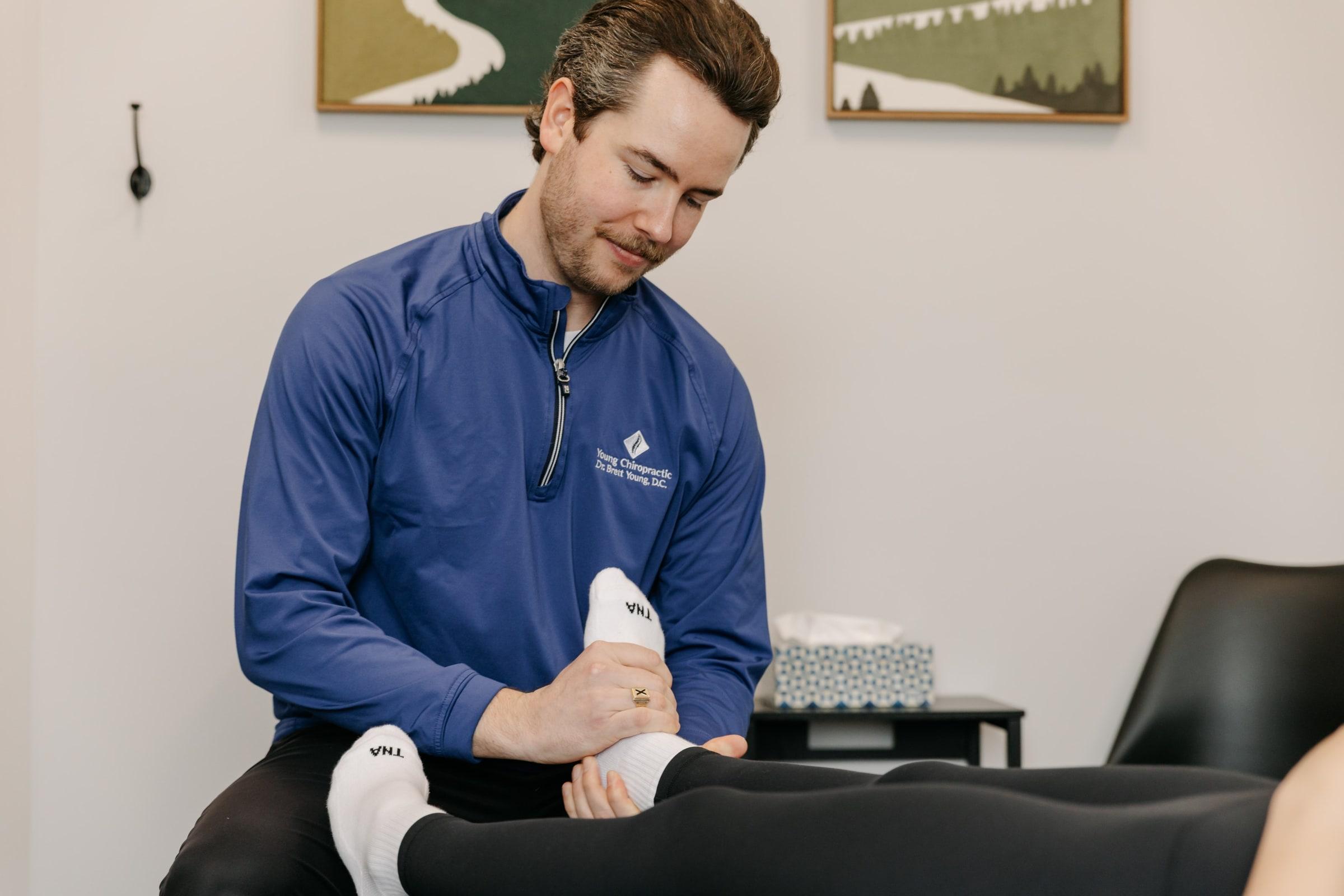
Foot & Ankle Pain Treatment in Uxbridge & Markham
Heel pain, plantar fasciitis, a sore Achilles or an ankle that keeps rolling. We’ll find what’s driving it and build a plan to get you back on your feet.
- 5.0 from 63 Google reviews
- Weekday evening appointments
- Saturday appointments in Uxbridge
- Shockwave
- For heel and Achilles pain that hasn't settled
- 2
- Clinics in Uxbridge and Markham
- Direct
- Billing to most insurers

Why Does My Foot or Ankle Hurt?
Foot and ankle pain often comes from the tissues that take your weight with every step. Plantar fasciitis affects the thick band along the bottom of your foot and is one of the most common causes of heel pain. The Achilles tendon at the back of the ankle can become sore with running or a sudden jump in activity. Ankle sprains stretch or tear the ligaments on the outside of the ankle, and some never fully recover.
Plantar fasciitis is usually worst with your first steps out of bed or after sitting, then eases as you move. Achilles pain is often stiff in the morning and sore at the start of a run. After a sprain, the ankle may feel weak or give way on uneven ground. Flat feet or arches that roll in can add strain to the foot, knee and hip, and pain tends to build through a long day on your feet.
Common Causes of Foot and Ankle Pain
- A sudden increase in walking, running or time on your feet
- Long shifts standing on hard floors
- Worn-out or unsupportive footwear
- Flat feet, high arches or arches that roll in
- An old ankle sprain that never fully recovered
- Tight calf muscles
When to See a Doctor First
See a doctor or go to emergency before booking with us if:
- You can’t put weight on your foot after an injury, or the bone is tender to touch
- You felt a sudden snap or pop at the back of your ankle, like being kicked in the heel
- Your foot or ankle is hot, red and swollen, especially with a fever
- Your calf is swollen, warm or painful on one side
- You have numbness or burning in your feet, or a sore that isn’t healing, especially if you have diabetes
Your First Visit
- 1
Your Story
When the pain started, what you were doing, the shoes you wear, and how much time you spend on your feet at work and in sport. - 2
Your Assessment
We look at your feet standing, walking and lying down, test ankle movement, strength and balance, and check your knees, hips and back, since foot problems can show up higher up. Bring the shoes you wear most. - 3
Your Plan
We explain what we found in plain words and suggest a plan. If anything points to a fracture, tear or another problem outside our scope, we’ll refer you to your family doctor.
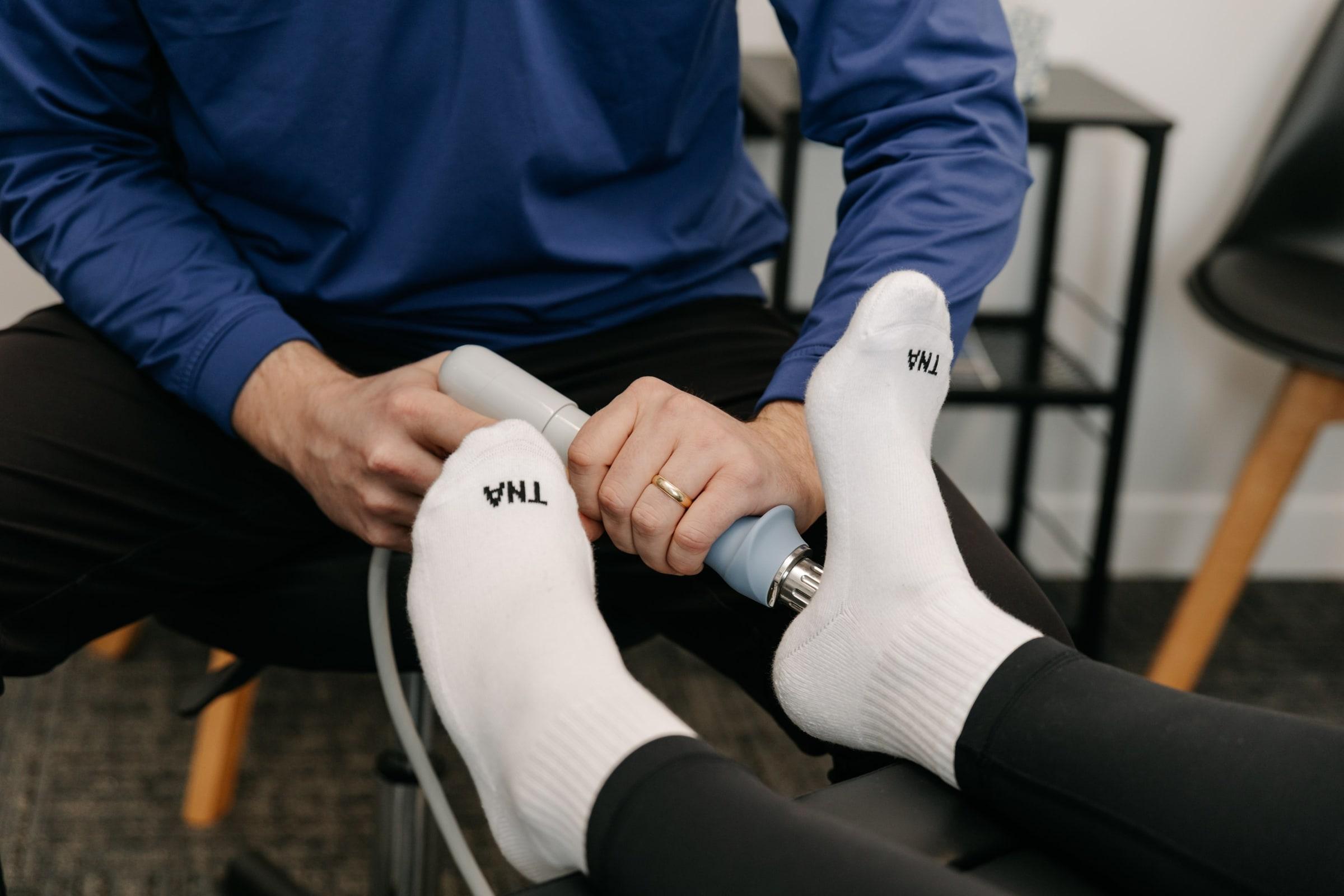
How We Help with Foot and Ankle Pain
Care starts by easing the strain on the sore tissue, then builds strength and support so your feet cope with your work and activities. Your plan may include:
- Chiropractic care for the foot, ankle, knee and back
- Shockwave therapy for plantar fasciitis and Achilles pain that hasn’t settled
- Custom orthotics, made from a scan or impression of your feet
- Acupuncture for muscle tension and pain
- Soft tissue therapy for the calf and foot
- Ultrasound and interferential current (IFC) therapy, which may help ease pain and muscle tension
- Strength and balance exercises to do at home
- Advice on footwear
Foot and Ankle Problems We Assess
Plantar Fasciitis
Heel Pain
Achilles Tendon Pain
Ankle Sprains
Flat Feet and Arch Pain
Knee Pain Linked to Foot Mechanics
Foot and Ankle Pain FAQs
Do I need custom orthotics?
Is shockwave therapy used for plantar fasciitis?
Do I need an X-ray after an ankle sprain?
Can I keep walking or running?
Book a Foot and Ankle Assessment in Uxbridge or Markham
If your heel, arch or ankle has been sore for a while, an assessment can show what’s driving it and what to do about it. Bring the shoes you wear most.