Concussion Management in Uxbridge & Markham
Baseline testing before your season and care after a head injury, using the SCAT6 assessment tool.
- 5.0 from 63 Google reviews
- Weekday evening appointments
- Saturday appointments in Uxbridge
- SCAT6
- Assessment tool used for baseline and post-injury testing
- 31
- Insurance companies we bill directly
- 2
- Clinics, in Uxbridge and Markham
What Is Concussion Management?
Concussion management at Young Chiropractic in Uxbridge and Markham covers two points in time: before an injury and after one. A concussion is a brain injury caused by a blow to the head, or by a hit to the body that whips the head forward and back. You don't have to be knocked out to have one. Headache, fogginess, dizziness, light sensitivity and trouble concentrating are all common signs.
A baseline test records how your memory, concentration and balance perform on a normal day. After a knock, we test again and compare. That difference can help guide when you're ready to step up activity, and when you're not yet.
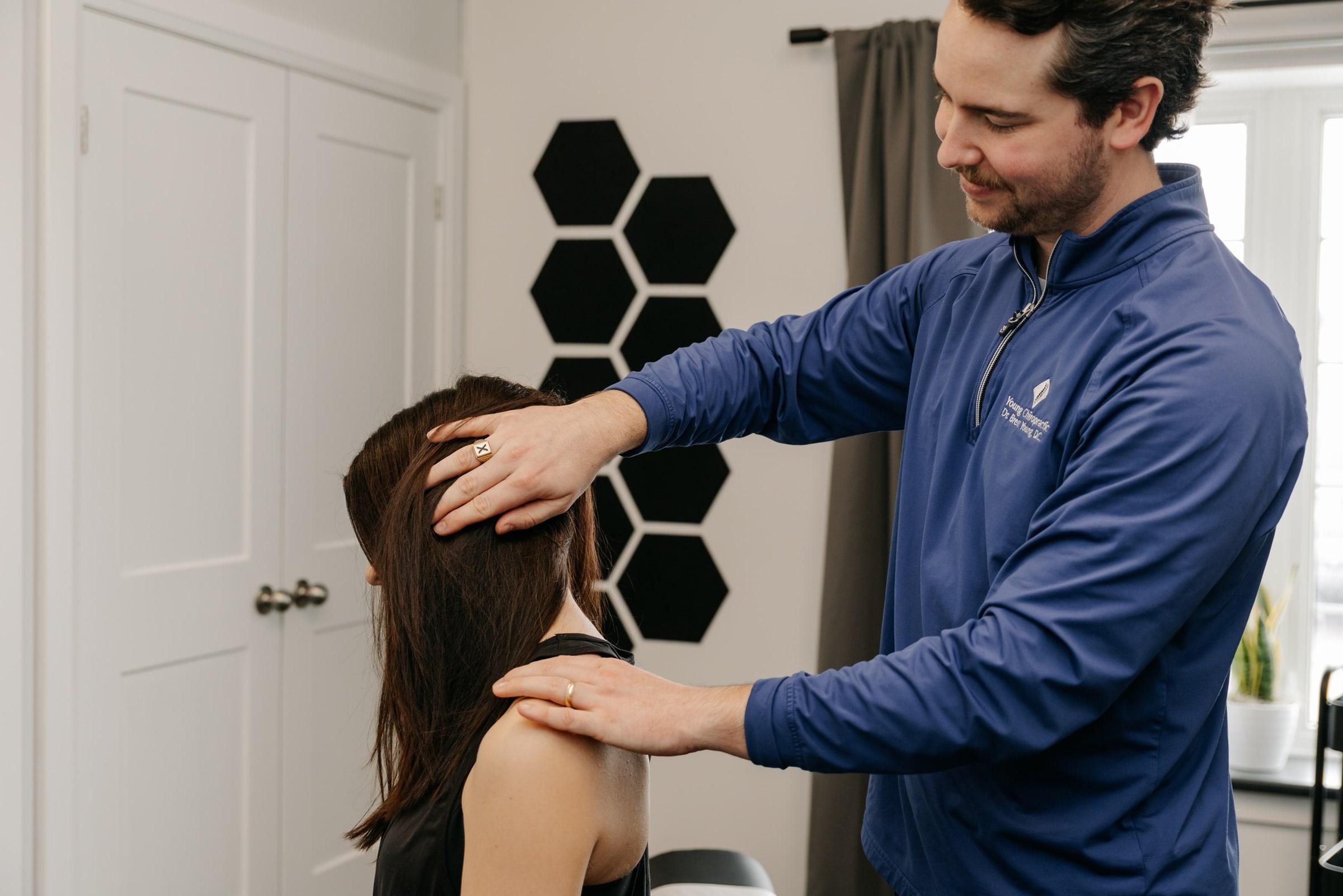
The same blow can strain the neck. Neck pain and headaches after a head injury may come partly from the joints and muscles there, which is the part we can assess and treat.
This care suits athletes in contact sports, parents and coaches arranging preseason testing, and anyone who's hit their head in a fall, on the ice or in a car accident.
Go to emergency rather than booking with us if symptoms are getting worse: a headache that keeps building, repeated vomiting, a seizure, growing confusion, slurred speech, or weakness or numbness in an arm or leg.
How We Can Help After a Head Injury
Sport-Related Concussion
Concussion from a Fall or Car Accident
Headaches After a Head Injury
Neck Pain and Stiffness After a Knock
Dizziness and Balance Problems
Symptoms That Haven't Settled
Preseason Baseline Testing
What Happens at a Concussion Assessment
A post-injury visit repeats the same tests as a baseline, plus a look at your neck and a plan for what comes next. Wear clothes you can move in, since part of it is balance work.
- 1
Your Injury and History
We ask how the injury happened, what you've felt since, and whether you've had a concussion before. Bring any notes from a hospital or walk-in visit. - 2
SCAT6 Testing
The Sport Concussion Assessment Tool, sixth edition, scores your symptoms, memory, concentration and balance. For children under 13, we use the Child SCAT6. With a baseline on file, today's results are compared against your own normal. - 3
Neck and Upper Back Exam
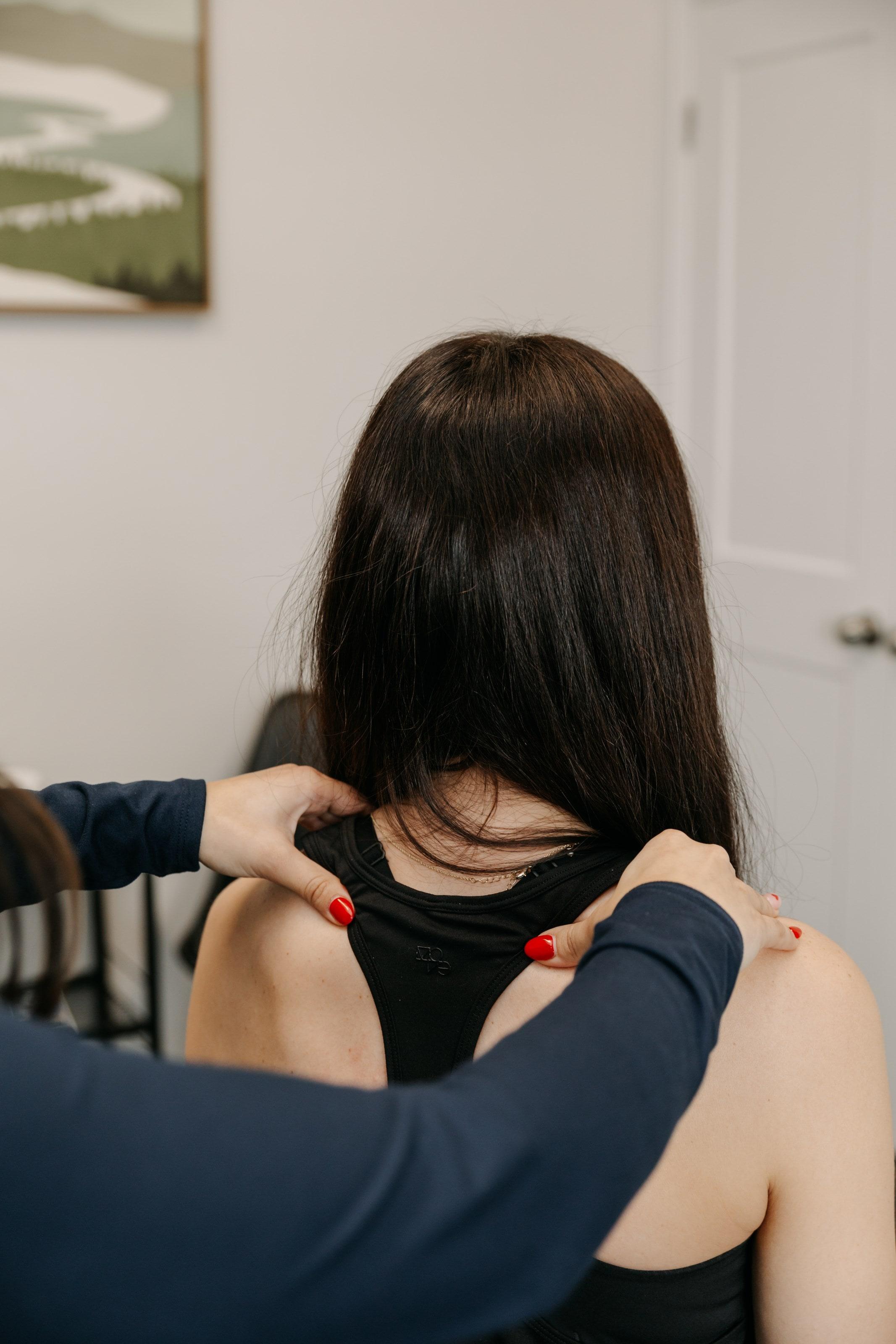
We check the joints and muscles of the neck and upper back. A strain there may add to headache and dizziness. - 4
Screening for Warning Signs
If anything points to an injury that needs a physician or imaging, we'll tell you and refer you on instead of treating. - 5
Your Plan and What Comes After
You leave with a treatment plan and the stage of your return-to-play or return-to-work plan you're starting at. Testing can bring on a headache or tiredness for a while afterwards. If you're not feeling up to driving, have someone bring you.
Is Concussion Care Covered by Insurance?
Concussion care here is paid through extended health benefits or privately. For current fees, call the clinic or check when you book online.
Extended health plans may include chiropractic coverage. Look up your yearly limit and whether your plan wants a doctor's referral first. Keep your receipt to submit the claim. You can check if we bill your insurer directly.
A concussion from a car accident may fall under your auto insurance accident benefits. One that happened at work may be covered through WSIB if your claim is approved. In either case, contact your insurer or claim adjuster before your visit so you know what's included.

Our Approach to Concussion Care in Uxbridge and Markham
Concussion care is offered at both our Uxbridge and Markham clinics.
- One test, before and after: SCAT6 is used for baseline and post-injury testing (the Child SCAT6 for children under 13), so your scores are compared on the same measure.
- Hands-on treatment with homework: manual therapy and chiropractic care for the neck and upper back sit alongside rehabilitative exercises you continue between visits.
- A staged way back: your return-to-play or return-to-work plan moves up one step at a time, and only when your symptoms allow.
When symptoms point to something outside our scope, we'll refer you to your family doctor.
Common Questions About Concussion Testing
Do I need a referral to book?
How soon after a head injury should I book?
When is the best time for a baseline test?
Should I rest in a dark room until it's gone?
What if my symptoms don't settle?
Book a Concussion Assessment in Uxbridge or Markham
Book a baseline test before the season, or an assessment after a head injury. If symptoms are getting worse, go to emergency first.