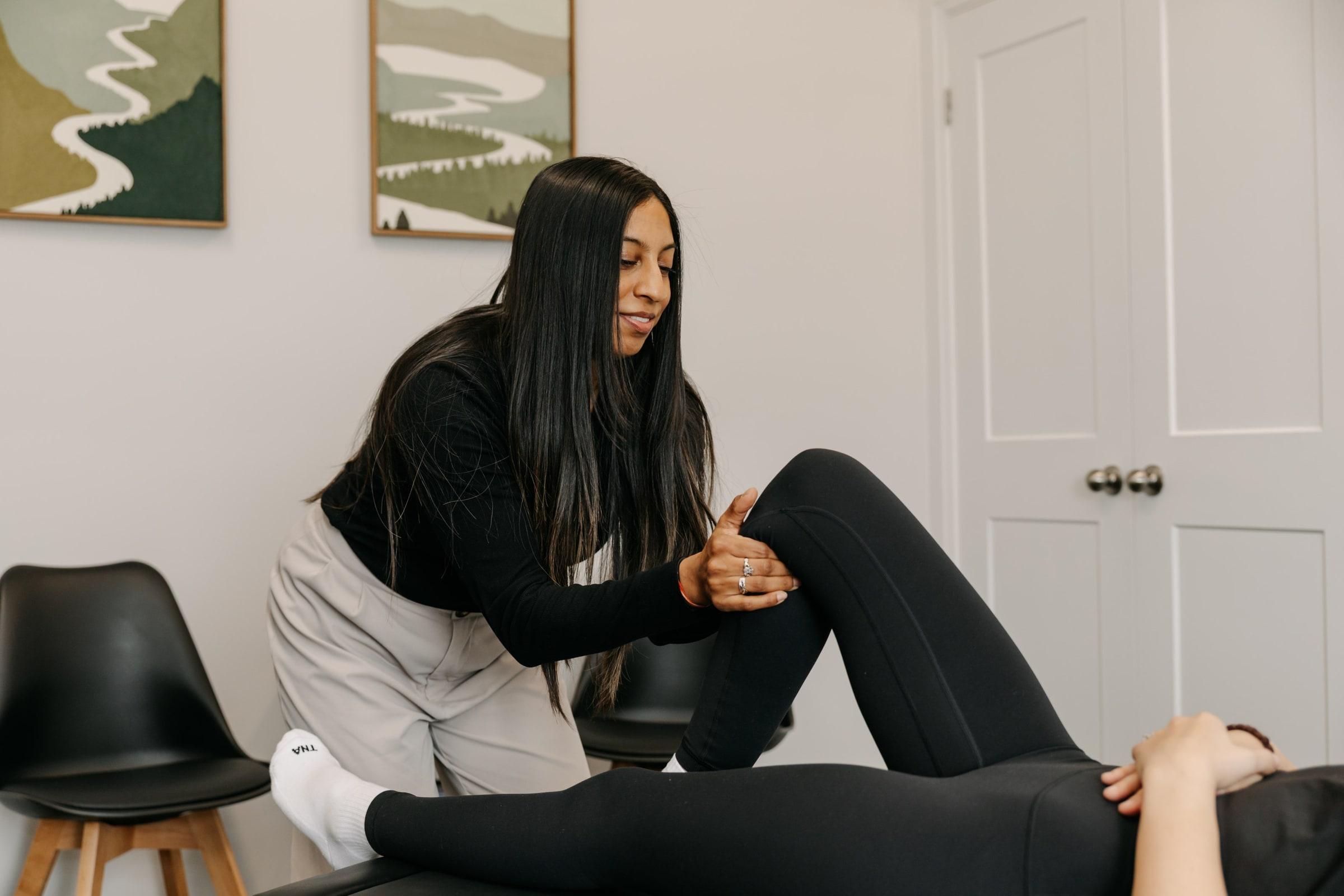
Knee Pain Treatment in Uxbridge & Markham
Knees that ache on stairs, swell after running or stiffen after sitting can hold you back. We’ll find what’s driving it and build a plan to keep you moving.
- 5.0 from 63 Google reviews
- Weekday evening appointments
- Saturday appointments in Uxbridge
- Shockwave
- For knee tendon pain that hasn't settled
- 2
- Clinics in Uxbridge and Markham
- Direct
- Billing to most insurers
Why Does My Knee Hurt?
Knee pain often comes from how much load the knee is handling, not just the knee itself. Pain around or behind the kneecap, often called runner’s knee, is one of the most common types. Pain just below the kneecap can come from the patellar tendon. Wear in the joint (arthritis) tends to cause stiffness and an ache deep in the knee.
Kneecap pain often flares on stairs, squatting, kneeling or after sitting with your knees bent. Tendon pain is usually sore at the start of activity, eases as you warm up, then aches afterwards. Arthritis often feels stiff in the morning and after sitting, and may swell after a busy day. How your hips and feet move plays a big part, which is why we look at both.
Common Causes of Knee Pain
- A sudden increase in running, hiking, stairs or sport
- Squatting, kneeling or long periods of sitting with bent knees
- Weak hip and thigh muscles
- Flat feet or arches that roll in
- Wear and tear in the knee joint (arthritis)
- A past knee injury that never fully recovered
When to See a Doctor First
See a doctor or go to emergency before booking with us if:
- You felt a pop during an injury and your knee swelled up quickly, within a few hours
- Your knee locks and won’t fully straighten
- You can’t put weight on your leg after an injury, or the bone is tender to touch
- Your knee is hot, red and swollen, especially with a fever
- Your calf is swollen, warm or painful on one side
- A child or teen has knee pain with a limp
Your First Visit
- 1
Your Story
When the pain started, what you were doing, which activities set it off, and what you want to get back to. - 2
Your Assessment
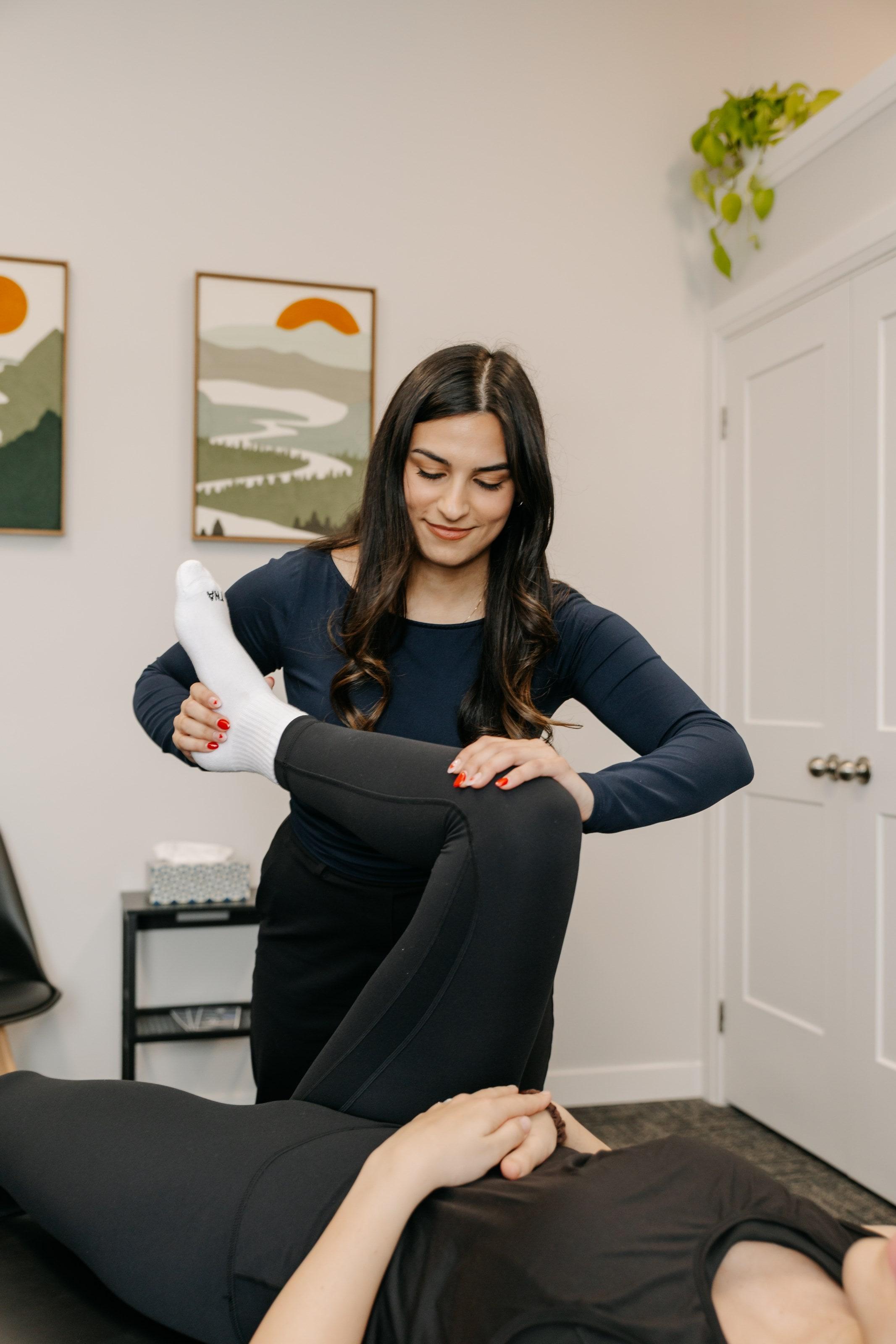
We test knee movement, strength and stability, watch how you squat and walk, and check your hips and feet, since knee pain often comes from how they move. - 3
Your Plan
We explain what we found in plain words and suggest a plan. If anything points to a ligament tear, fracture or another problem outside our scope, we’ll refer you to your family doctor.
How We Help with Knee Pain
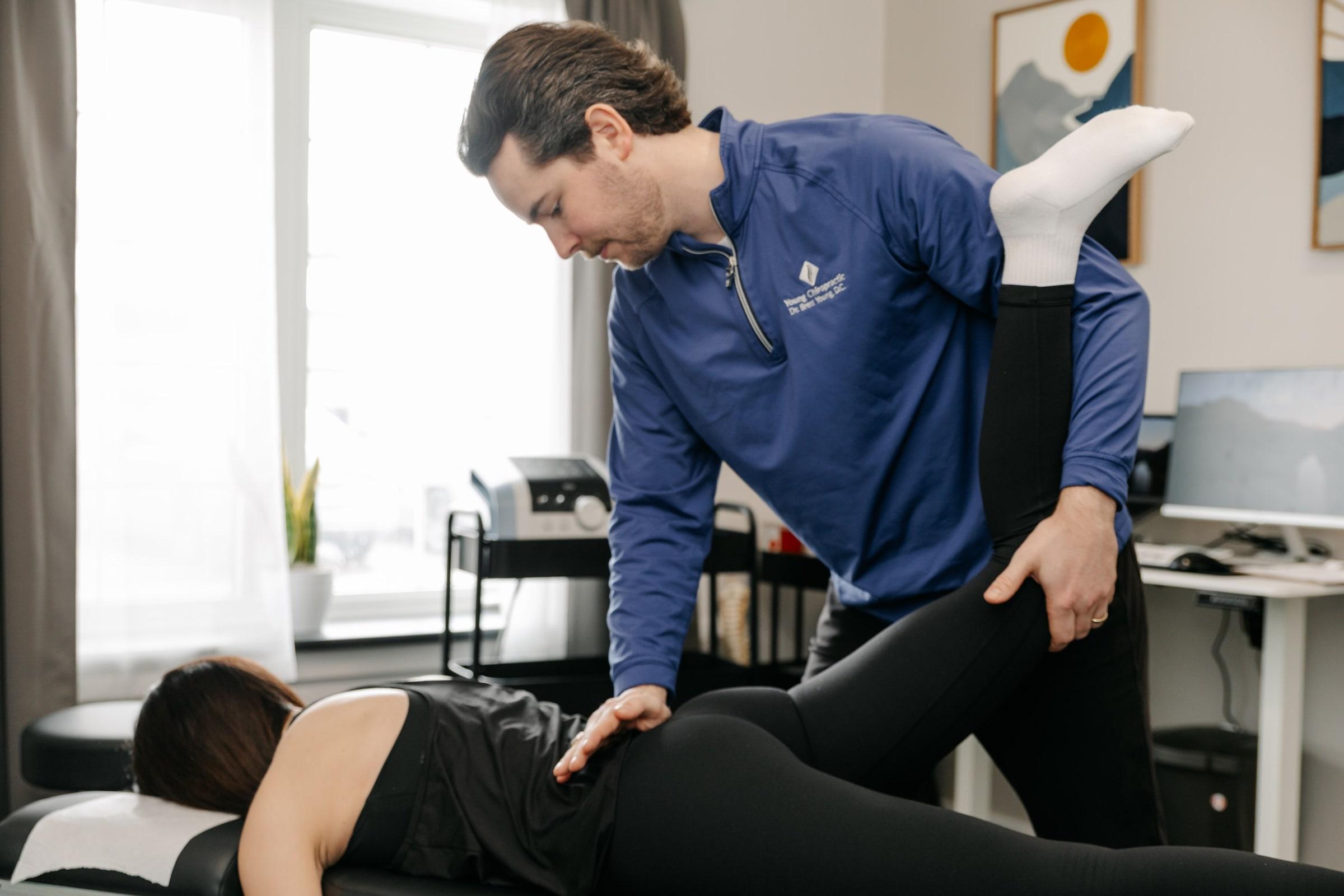
Care starts by calming the sore area and adjusting your activity so it’s manageable, then builds strength in the thigh, hip and calf so your knee copes with your sport and daily life. Your plan may include:
- Chiropractic care for the knee, hip and ankle
- Shockwave therapy for knee tendon pain that hasn’t settled
- Custom orthotics if your foot mechanics are adding strain
- Acupuncture for muscle tension and pain
- Soft tissue therapy for the thigh and calf muscles
- Ultrasound and interferential current (IFC) therapy, which may help ease pain and muscle tension
- Strength exercises to do at home, progressed as your knee allows
- Advice on running, stairs and activity
Knee Problems We Assess
Runner’s Knee (Kneecap Pain)
Patellar Tendon Pain
Knee Osteoarthritis
IT Band Pain
Knee Pain Linked to the Hip
Knee Pain Linked to Foot Mechanics
Knee Pain FAQs
Can my hips or feet cause knee pain?
Can a chiropractor help with knee arthritis?
Should I stop running?
Do I need an X-ray or MRI?
Book a Knee Pain Assessment in Uxbridge or Markham
If your knee is getting in the way of stairs, sport or your daily routine, an assessment can show what’s driving it and what to do about it.