Jaw & TMJ Pain Treatment in Uxbridge & Markham
A jaw that clicks, aches when you chew, or tightens up with stress can affect your neck and head too. We’ll find what’s driving it and build a plan to ease it.
- 5.0 from 63 Google reviews
- Weekday evening appointments
- Saturday appointments in Uxbridge
- No referral
- Needed to book
- 2
- Clinics in Uxbridge and Markham
- Direct
- Billing to most insurers

Why Does My Jaw Hurt?
Your temporomandibular joint (TMJ) connects your lower jaw to your skull, just in front of each ear. Jaw pain usually comes from the joint itself or from the chewing muscles around it, which work hard every time you eat, talk, yawn or clench your teeth.
It can feel like an ache in front of the ear, tight or tired jaw muscles, or pain when you chew or open wide. Your jaw may click, pop or feel stiff, especially in the morning if you clench or grind at night. Jaw problems often come with tension in the neck and shoulders and headaches at the temples, which is why we look at all three together.
Common Causes of Jaw Pain
- Clenching or grinding your teeth, often during sleep
- Stress and tension held in the jaw and shoulders
- Neck stiffness and forward head posture from desk or phone use
- Chewing gum or tough foods
- Long dental appointments or opening very wide
- A past injury to the jaw or face
When to See a Doctor First
See a doctor, dentist or go to emergency before booking with us if:
- Your jaw is locked open or closed and won’t move
- You’ve had a blow to the face and your bite feels off, or there’s swelling or bruising
- Jaw pain comes with chest pain, shortness of breath or sweating
- You have a fever, facial swelling or a painful tooth
- You’re over 50 with new jaw pain when chewing, a new headache, scalp tenderness or changes in vision
Your First Visit
- 1
Your Story
When the pain started, what sets it off, whether you clench or grind, and how it affects eating, talking and sleep. - 2
Your Assessment
We check how your jaw opens, closes and moves side to side, feel the jaw and neck muscles for tension, and look at your neck and posture, since they’re often part of the problem. - 3
Your Plan
We explain what we found in plain words and suggest a plan. If anything points to a dental problem or something outside our scope, we’ll refer you to your dentist or family doctor.
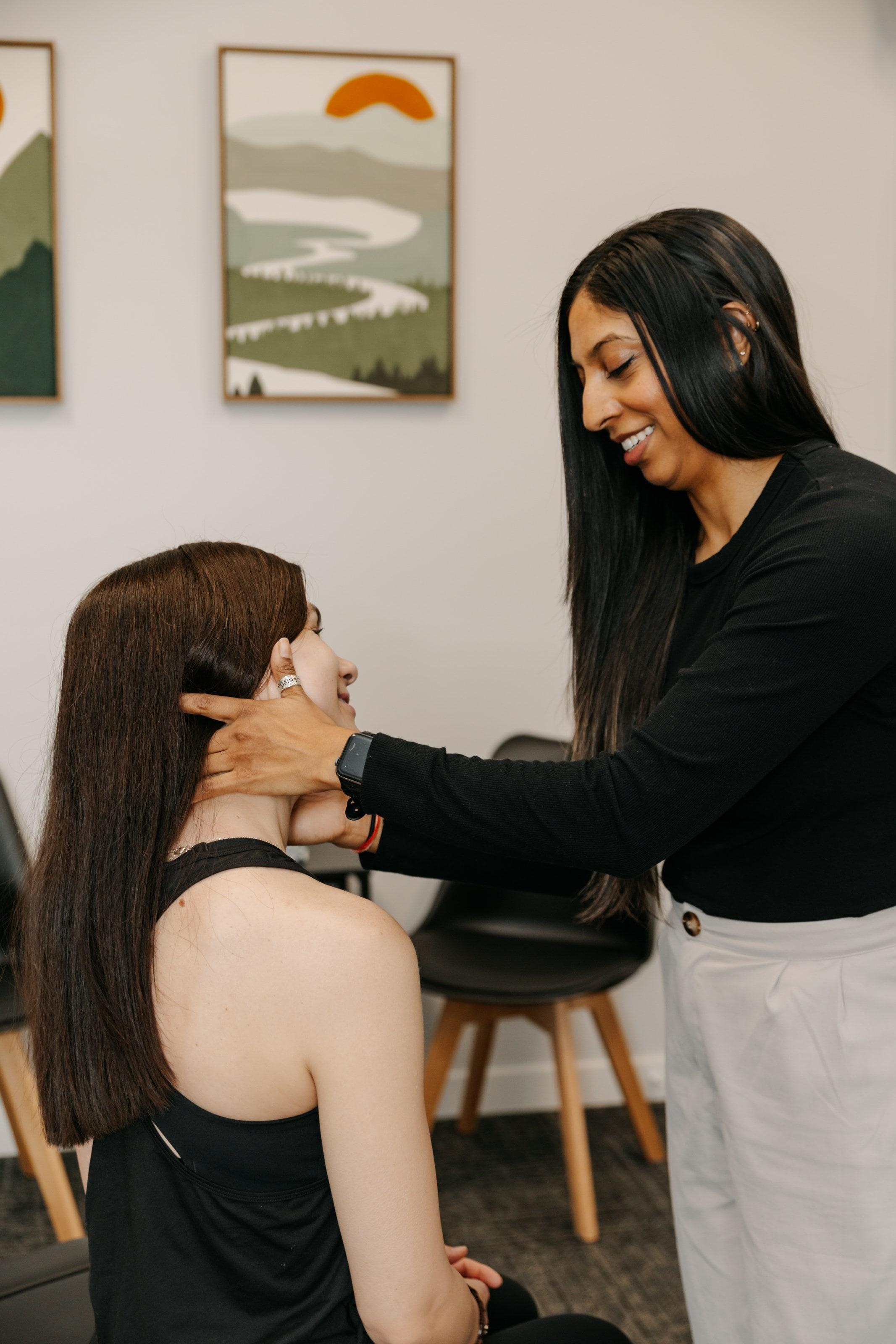
How We Help with Jaw Pain
Care focuses on easing tension in the jaw muscles, improving how the jaw and neck move, and building habits that take strain off the joint. Your plan may include:
- Soft tissue therapy for the jaw, neck and shoulder muscles
- Gentle mobilization of the jaw joint
- Chiropractic care for the neck and upper back
- Acupuncture for jaw and neck tension
- Jaw exercises to do at home
- Advice on clenching habits, chewing, posture and stress
We’re happy to work alongside your dentist, especially if you wear or need a night guard.
Jaw Problems We Assess
Jaw Clicking and Popping
Jaw Stiffness and Locking
Tight Jaw Muscles
Teeth Clenching and Grinding
Headaches Linked to the Jaw
Neck Pain
Jaw and TMJ FAQs
Should I see a dentist or a chiropractor for jaw pain?
Is jaw clicking a problem?
Can jaw tension cause headaches?
Do I need a referral?
Book a Jaw Pain Assessment in Uxbridge or Markham
If your jaw aches, clicks or tightens up, an assessment can show what’s driving it and what to do about it.