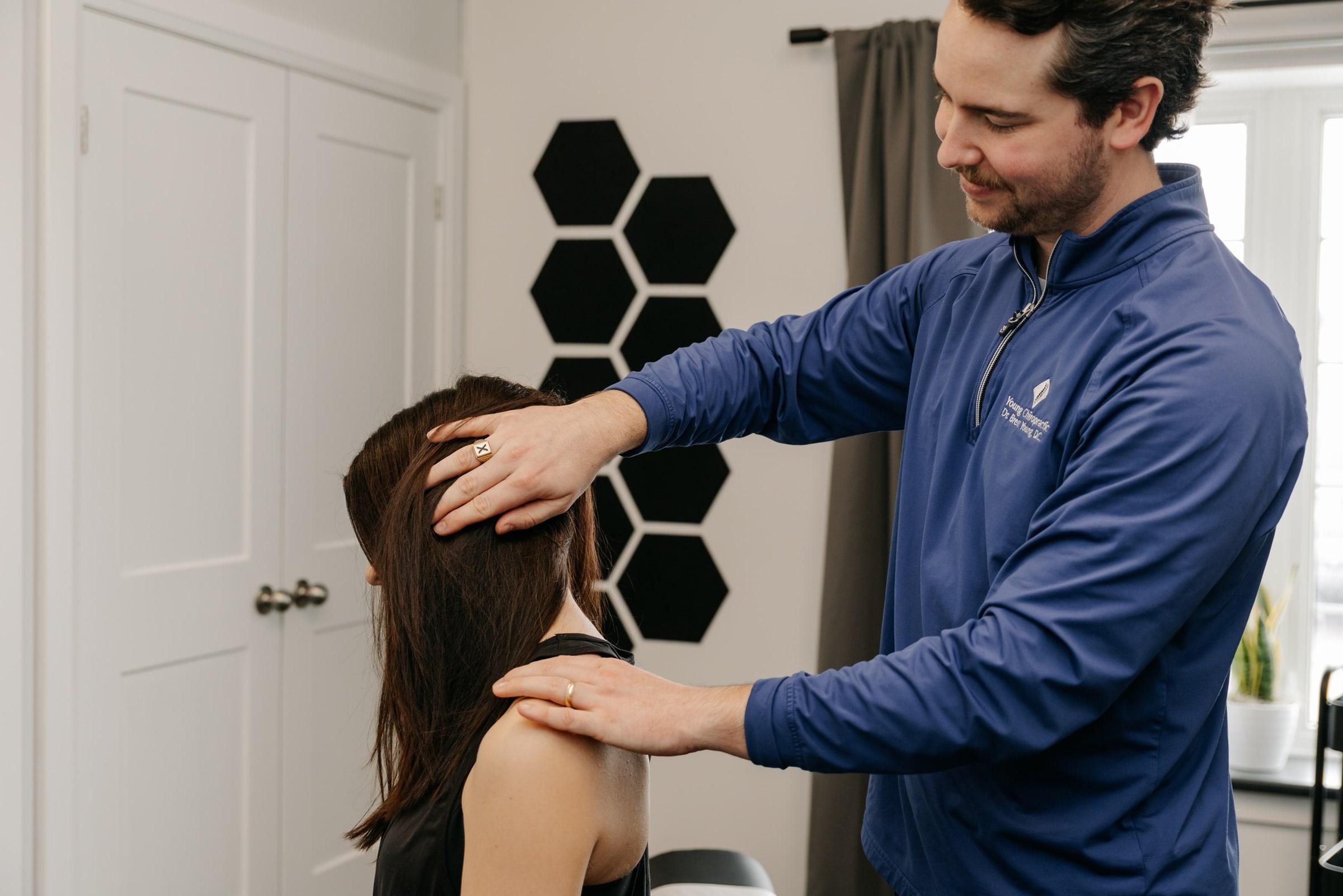
Neck Pain Treatment in Uxbridge & Markham
A stiff or sore neck can make desk work, driving, sleep and shoulder checks harder than they should be. We’ll find what’s driving it and build a plan to get you moving freely again.
- 5.0 from 63 Google reviews
- Weekday evening appointments
- Saturday appointments in Uxbridge
- No referral
- Needed to book
- 2
- Clinics in Uxbridge and Markham
- Direct
- Billing to most insurers

Why Does My Neck Hurt?
Your neck is made up of seven small vertebrae, the discs and joints between them, and the muscles that hold up and move your head all day. Most neck pain comes from these joints and muscles getting stiff, strained or overloaded, rather than serious damage. Long hours at a desk or on a phone, sleeping in an awkward position, and stress are common triggers.
Neck pain can feel like stiffness when you turn your head, an ache across the top of the shoulders, or a sharp catch with certain movements. Some people wake up with a neck that’s locked to one side. Pain from the neck often spreads into the shoulder blades and can cause headaches at the base of the skull.
If pain, tingling or numbness travels down your arm into your hand, a nerve in the neck may be irritated, sometimes called a pinched nerve. Neck pain after a car accident, often called whiplash, can come with headaches, dizziness and stiffness that builds over a day or two.
Common Causes of Neck Pain
- Long hours at a desk, computer or phone
- Sleeping in an awkward position or on an unsupportive pillow
- Car accidents and sudden jolts (whiplash)
- Lifting, carrying or sports that strain the neck and shoulders
- Stress and tension held in the shoulders
- Wear and tear in the neck joints with age
When to See a Doctor First
See a doctor or go to emergency before booking with us if:
- Your neck pain started after a serious fall or car accident, especially with numbness or weakness
- You have numbness or weakness in both arms or legs, clumsy hands, or trouble walking
- You have a fever, headache and a stiff neck, especially with a rash
- Sudden, severe neck pain comes with dizziness, double vision, or trouble speaking or swallowing
- You have unexplained weight loss, a history of cancer, or constant pain at night
Your First Visit
- 1
Your Story
When the pain started, what you were doing, what eases it and what sets it off, and how it affects your work, sleep and driving. - 2
Your Assessment
We test how your neck moves, check your upper back and shoulders, feel the joints and muscles involved, and test reflexes, strength and sensation in your arms if pain or tingling travels down. - 3
Your Plan
We explain what we found in plain words, what care could look like, and what to do at home. If anything points to a problem outside our scope, we’ll refer you to your family doctor.
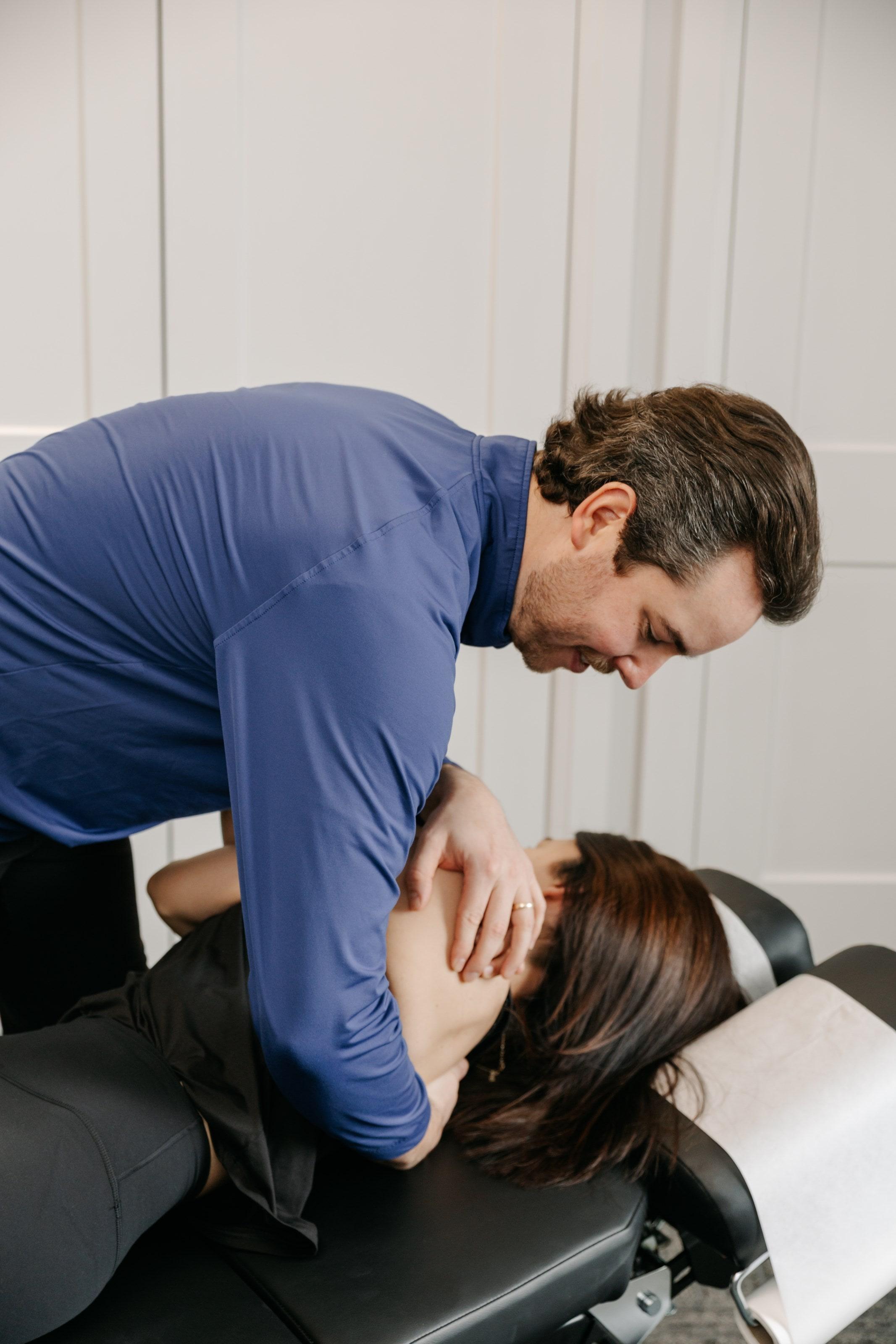
How We Help with Neck Pain
Care starts by easing pain and stiffness so you can move your neck comfortably, then builds strength and better habits so it’s less likely to keep coming back. Your plan may include:
- Chiropractic adjustments and gentle mobilization for the neck and upper back
- Soft tissue therapy for the neck, shoulder and upper back muscles
- Acupuncture for muscle tension and pain
- Ultrasound and interferential current (IFC) therapy, which may help ease pain and muscle tension
- Neck and upper back exercises to do at home
- Advice on your desk set-up, phone use, pillow and sleep position
Neck Problems We Assess
Neck Pain FAQs
Is it safe to have my neck adjusted?
Can my neck cause arm pain or tingling?
I hurt my neck in a car accident. Is my care covered?
What’s the best pillow for neck pain?
Book a Neck Pain Assessment in Uxbridge or Markham
If your neck is getting in the way of work, sleep or driving, an assessment can show what’s driving it and what to do about it.