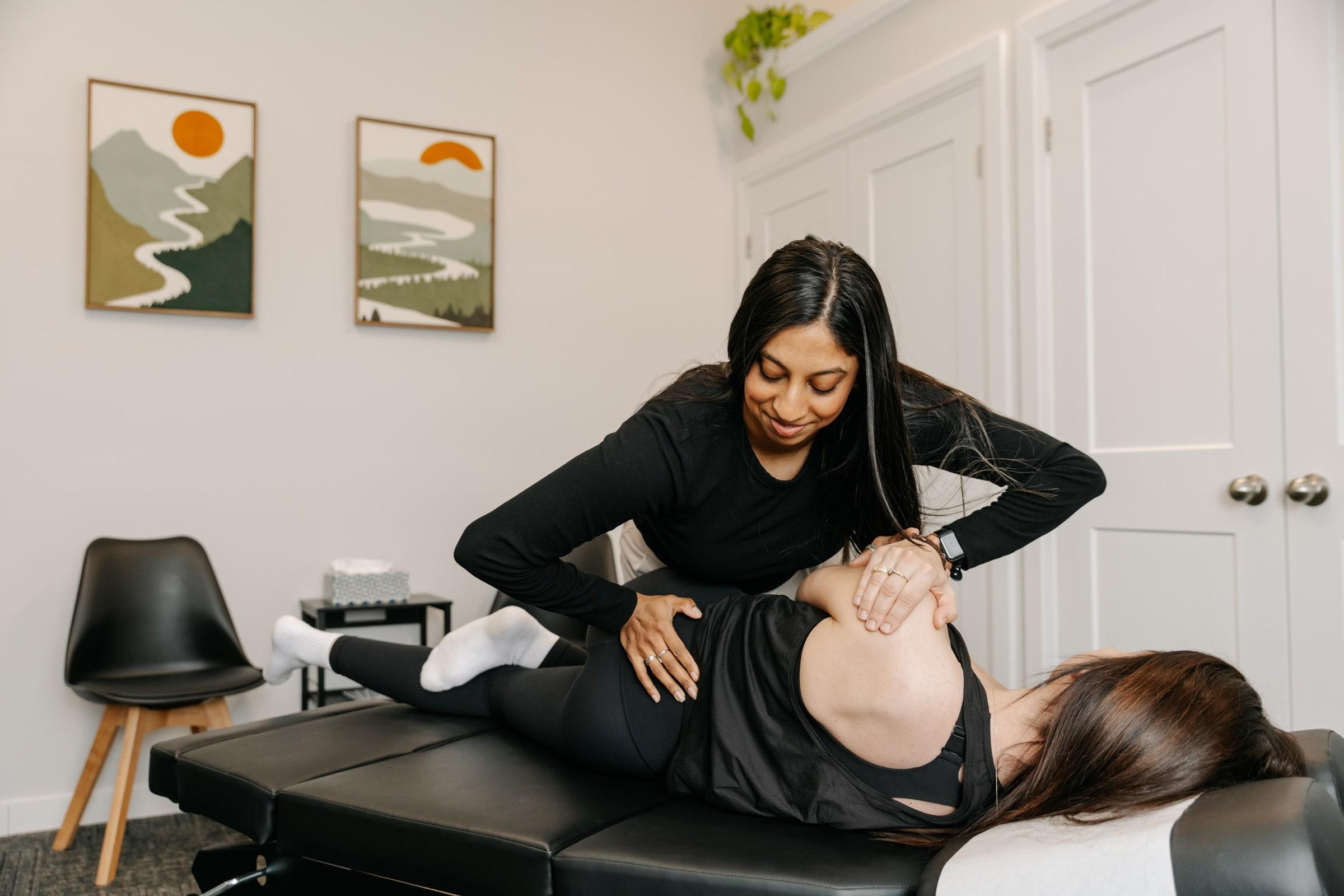
Low Back Pain Treatment in Uxbridge & Markham
Low back pain can make sitting, sleeping, lifting and driving harder than they should be. We’ll find what’s driving it and build a plan to get you back to the things you enjoy.
- 5.0 from 63 Google reviews
- Weekday evening appointments
- Saturday appointments in Uxbridge
- No referral
- Needed to book
- 2
- Clinics in Uxbridge and Markham
- Direct
- Billing to most insurers
Why Does My Lower Back Hurt?
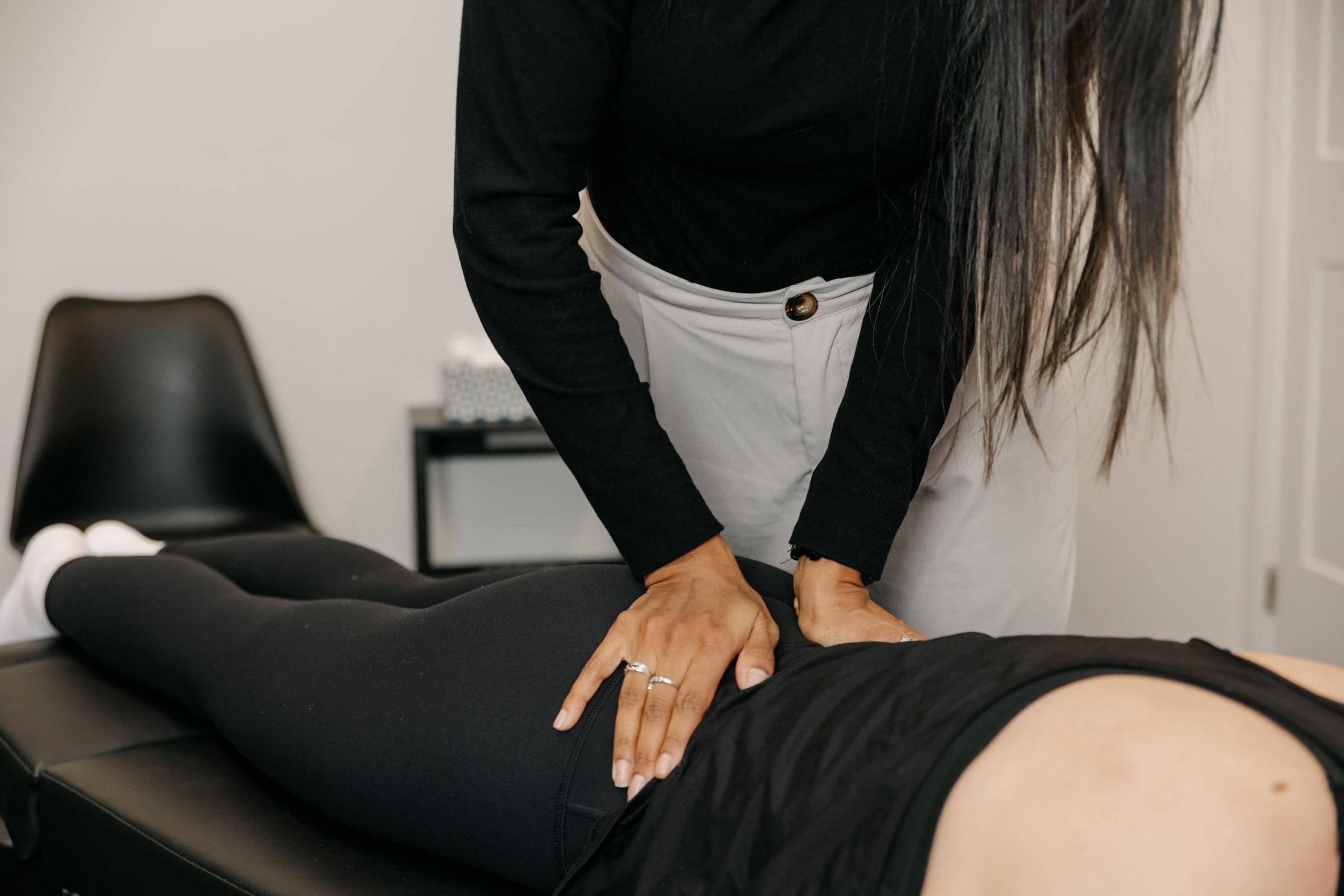
Your lower back is made up of the vertebrae, the discs between them, the small joints that link them, the sacroiliac (SI) joints where your spine meets your pelvis, and the muscles and ligaments around all of it. Any of these can be a source of pain, and often more than one is involved. Most low back pain isn’t caused by serious damage, even when it’s very sore.
It can feel like a dull ache across the belt line, a sharp catch when you bend or twist, or stiffness that makes getting out of bed slow. Pain that’s worse with sitting and bending forward can point to the discs. Pain that’s worse leaning back or standing still can point to the small joints. One-sided pain near the dimple at the base of your back may involve the SI joint.
Pain that travels into the buttock or down the leg, sometimes with tingling or numbness, suggests an irritated nerve. This is often called sciatica. If you’ve had an X-ray or MRI, terms like “disc bulge” or “degenerative changes” are common and often show up in people with no pain at all, so a scan is only one piece of the picture.
Common Causes of Low Back Pain
- Lifting, twisting or a sudden jump in activity, like snow shovelling or the first weekend of yard work
- Long hours of sitting at a desk or driving
- Weak or tired core and hip muscles
- Pregnancy and lifting young children
- Wear and tear in the discs and joints with age
- Stress and poor sleep, which can make pain feel worse and last longer
When to See a Doctor First
See a doctor or go to emergency before booking with us if:
- You have new loss of bladder or bowel control, or numbness in the groin or inner thighs
- You have leg weakness that’s getting worse, or symptoms in both legs
- Your pain started after a serious fall or car accident
- You have back pain with a fever, unexplained weight loss, or a history of cancer
- Your pain is constant and doesn’t change with movement, rest or position, especially at night
Your First Visit
- 1
Your Story
When the pain started, what you were doing, what eases it and what sets it off, plus your sleep, work, past episodes and what you want to get back to. - 2
Your Assessment
We watch how you bend, twist and walk, check your hips and pelvis, feel the joints and muscles involved, and test reflexes, strength and sensation in your legs if pain travels down. - 3
Your Plan
We explain what we found in plain words, what care could look like, and what to do at home. If anything points to a problem outside our scope, we’ll refer you to your family doctor.
How We Help with Low Back Pain
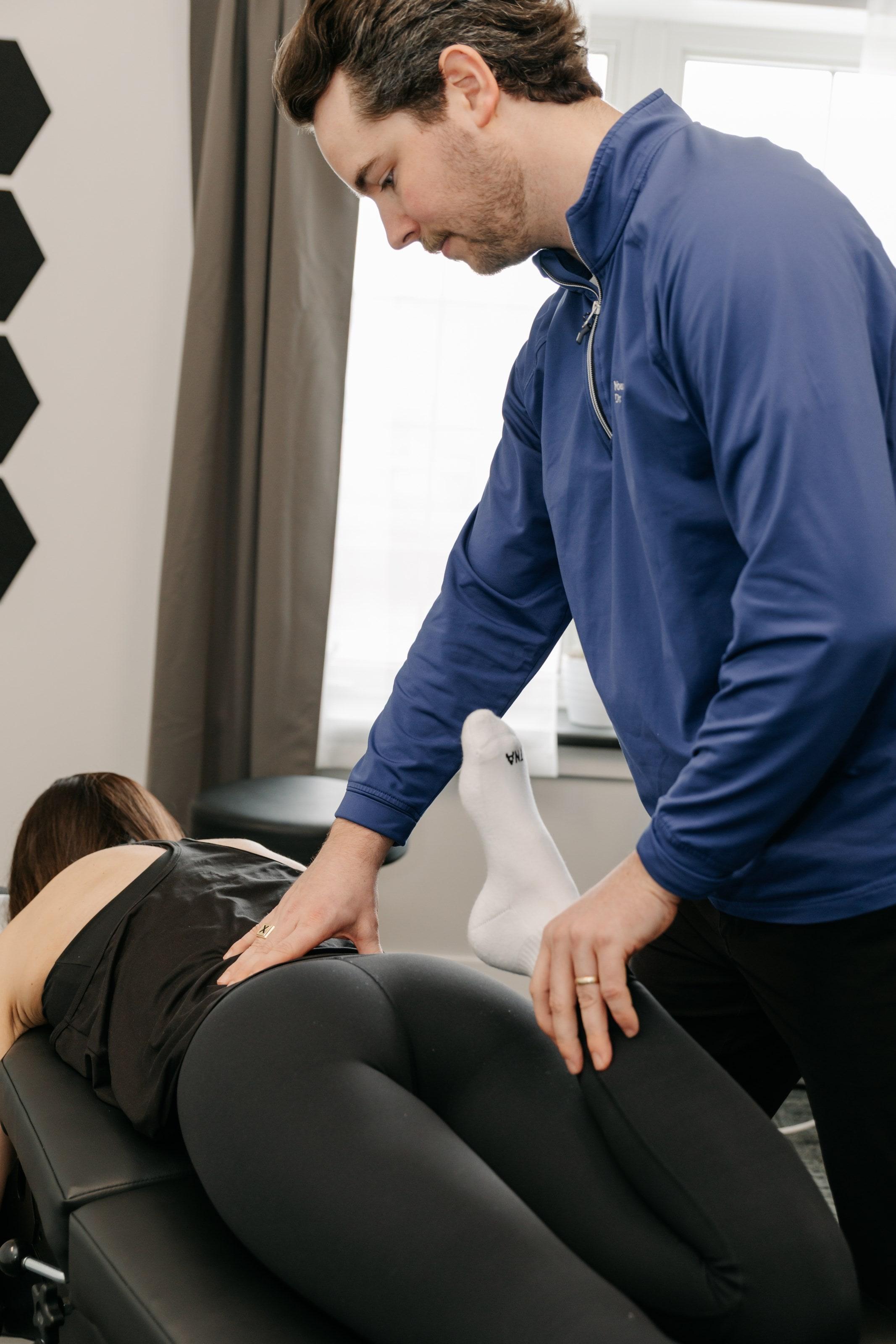
Care starts by easing pain and getting you moving comfortably, then builds strength and tolerance for whatever set it off, whether that’s lifting, sitting or running. Staying gently active usually helps back pain settle faster than bed rest. Your plan may include:
- Chiropractic adjustments and gentle mobilization for the low back, pelvis and hips
- Soft tissue therapy for the back, hip and buttock muscles
- Acupuncture for muscle tension and pain
- Ultrasound and interferential current (IFC) therapy, which may help ease pain and muscle tension
- Shockwave therapy for stubborn muscle and tendon pain around the low back and hips
- Custom orthotics if your foot mechanics are adding strain
- Core and hip exercises to do at home, progressed as your back allows
- Advice on sitting, lifting, sleep and what to do if your back flares up
Back Problems We Assess
Low Back Pain FAQs
Do I need an X-ray or MRI first?
Should I rest or keep moving?
Should I use heat or ice?
What is sciatica?
Book a Low Back Pain Assessment in Uxbridge or Markham
If your back is getting in the way of work, sleep or the things you enjoy, an assessment can show what’s likely behind it and what to do next.