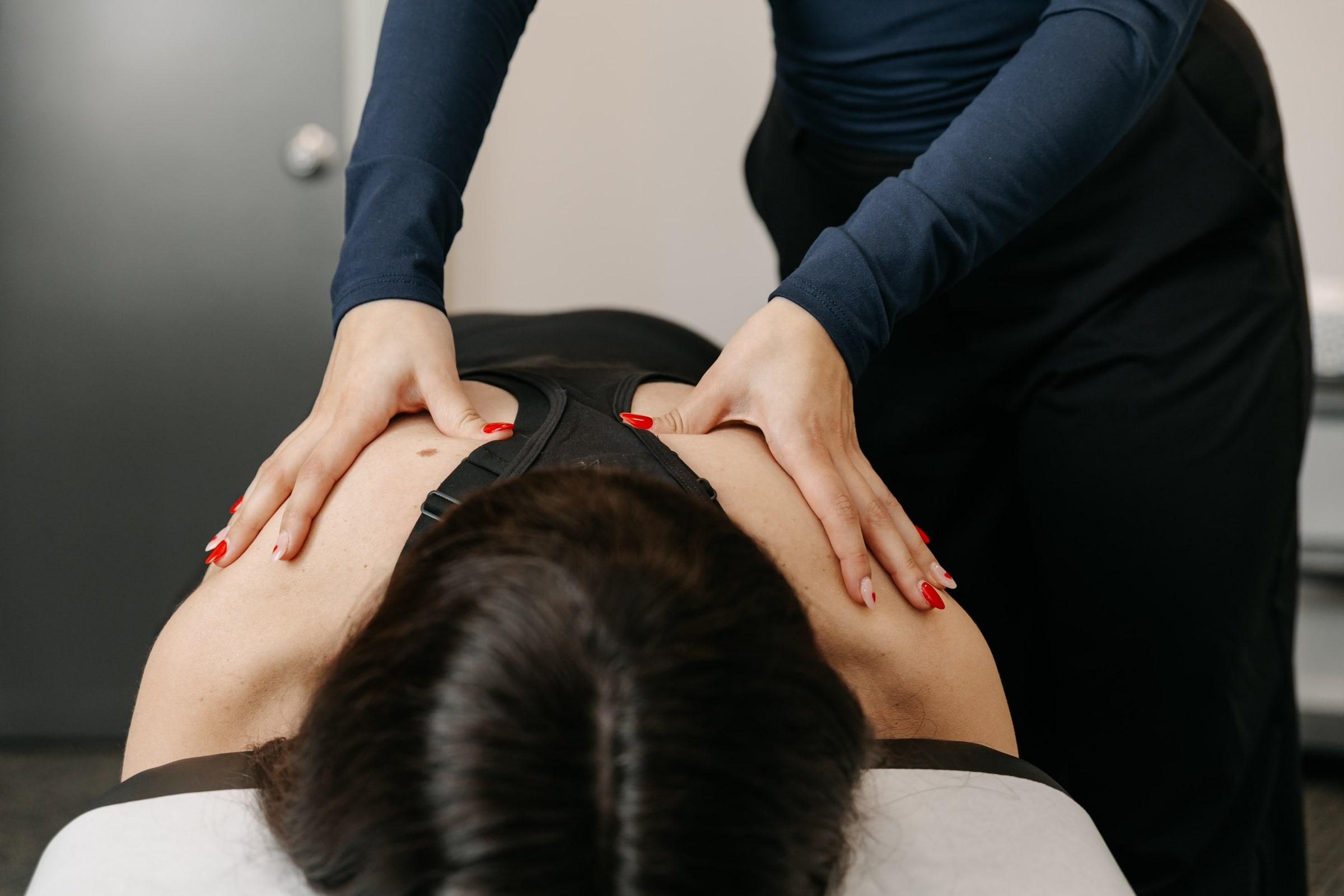
Scoliosis Care in Uxbridge & Markham
For teens with a newly found spinal curve and adults with back pain or stiffness linked to scoliosis. We’ll assess your spine, explain what we find and work alongside your doctor.
- 5.0 from 63 Google reviews
- Weekday evening appointments
- Saturday appointments in Uxbridge
- No referral
- Needed to book
- 2
- Clinics in Uxbridge and Markham
- Direct
- Billing to most insurers
What Is Scoliosis?
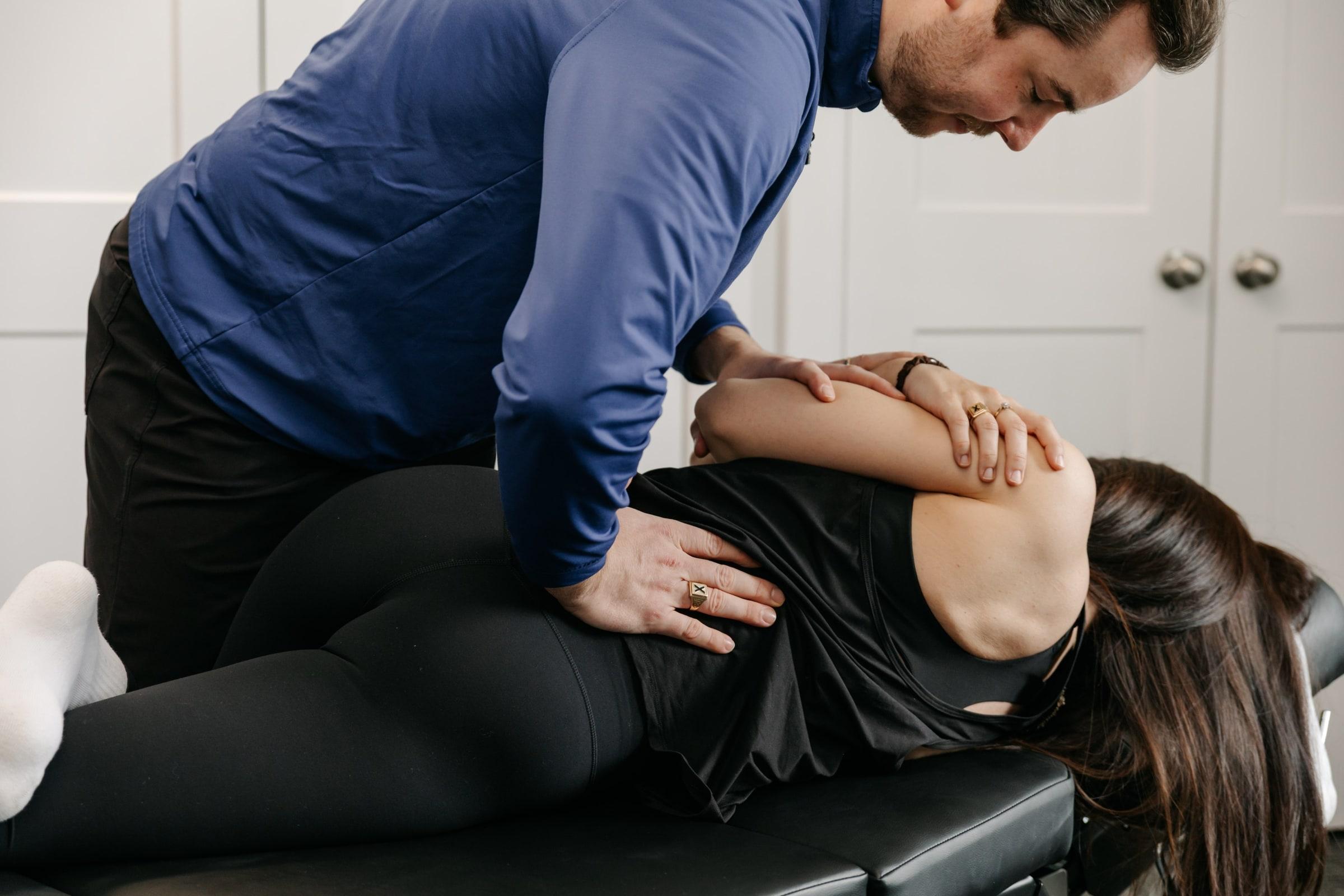
Scoliosis is a sideways curve of the spine, often with some twisting. Most cases start in the pre-teen and teen years during growth spurts and have no known cause, though they can run in families. Adults can also develop a curve over time as the discs and joints of the spine wear.
Many curves are mild and cause no pain. Signs to watch for include one shoulder or hip sitting higher than the other, a shoulder blade that sticks out, clothes that hang unevenly, or a bump on one side of the back when bending forward. In adults, scoliosis can come with back pain, stiffness or tired back muscles, especially after standing or walking for a while.
What Causes Scoliosis?
- No known cause in most cases, especially in teens
- A family history of scoliosis
- Rapid growth during the pre-teen and teen years
- Wear in the spine’s discs and joints with age
- A leg length difference or muscle spasm that tilts the spine
- Rarely, a condition present from birth or a nerve or muscle condition
When to See a Doctor First
See a doctor before booking with us if:
- A child or teen’s curve seems to be getting worse quickly
- A child or teen with scoliosis has back pain, especially at night
- You have numbness, tingling or weakness in your legs
- You have changes in bladder or bowel control
- You have back pain with a fever, unexplained weight loss, or a history of cancer
Your First Visit
- 1
Your Story
When the curve was noticed, any family history, past X-rays or bracing, and any pain or stiffness you have. - 2
Your Assessment
We look at your posture from the front, back and side, check shoulder and hip height, do a forward bend test, and assess how your spine, hips and shoulders move. - 3
Your Plan
We explain what we found in plain words. If X-rays or a specialist opinion are needed to measure the curve, we’ll refer you to your family doctor. If you’re dealing with pain or stiffness, we’ll suggest a plan.
How We Help with Scoliosis
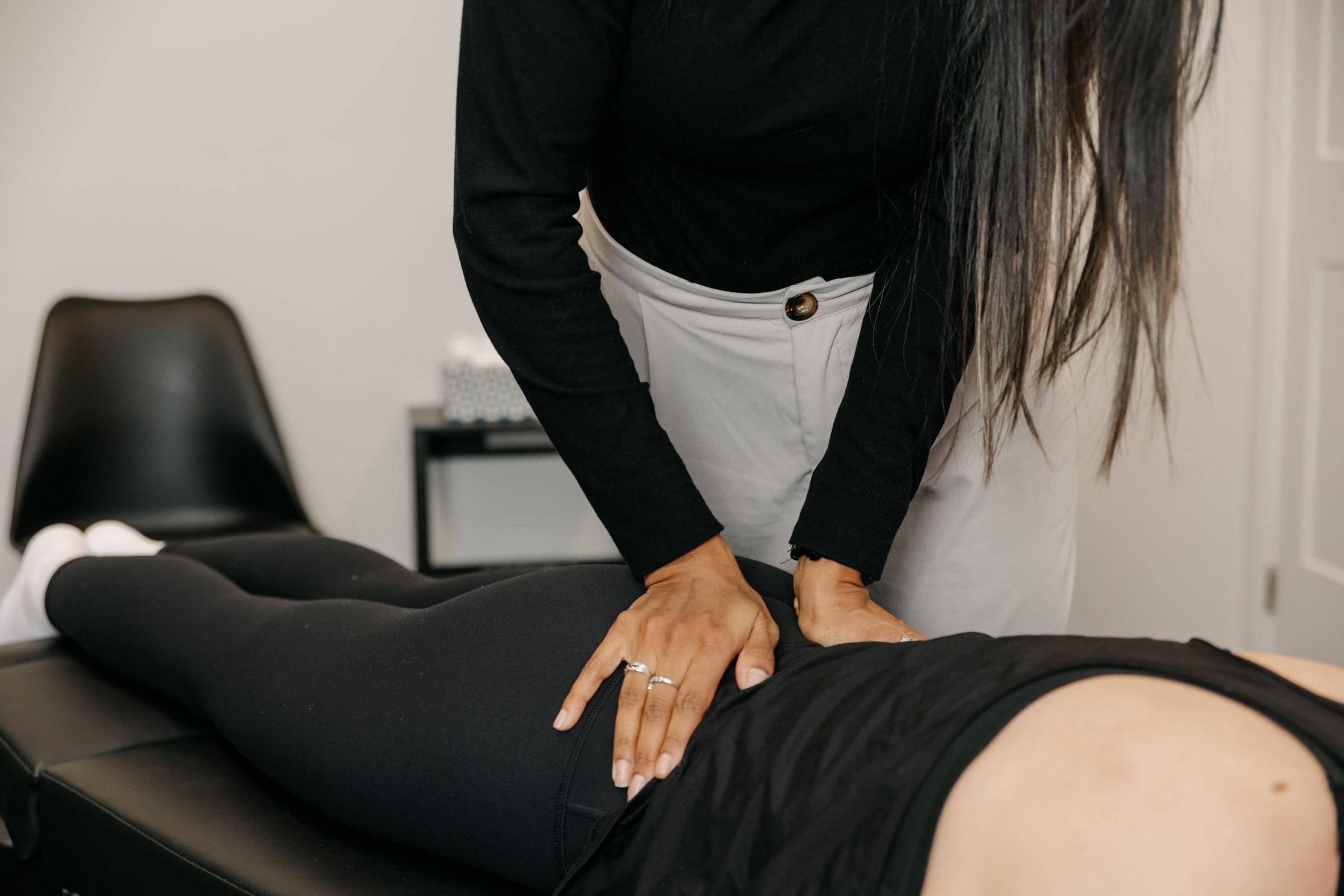
Care focuses on easing pain and stiffness, keeping your spine and hips moving well, and building strength around your trunk. For growing kids and teens, we also help keep an eye on the curve and work with your family doctor or specialist. Your plan may include:
- Chiropractic care and gentle mobilization for the back, hips and ribs
- Soft tissue therapy for tight or tired back muscles
- Acupuncture for muscle tension and pain
- Strength and mobility exercises to do at home
- Advice on staying active, sport and posture habits
- Regular check-ins to monitor how the curve looks over time
Scoliosis Concerns We Assess
Teen (Adolescent) Scoliosis
Adult Scoliosis
Uneven Shoulders or Hips
Mid-Back Stiffness
Back Pain with Scoliosis
Neck Pain
Scoliosis FAQs
Can chiropractic care straighten my spine?
Will my child need a brace?
Should my child stop playing sports?
Do I need an X-ray?
Book a Scoliosis Assessment in Uxbridge or Markham
Whether your child’s curve was just found or you’re an adult with back pain linked to scoliosis, an assessment is a good first step.