
Shoulder Pain Treatment in Uxbridge & Markham
A shoulder that aches when you reach overhead, or keeps you up when you lie on it, can get in the way of work, sport and sleep. We’ll find what’s driving it and build a plan to get your arm moving again.
- 5.0 from 63 Google reviews
- Weekday evening appointments
- Saturday appointments in Uxbridge
- Shockwave
- For shoulder pain that hasn't settled
- 2
- Clinics in Uxbridge and Markham
- Direct
- Billing to most insurers
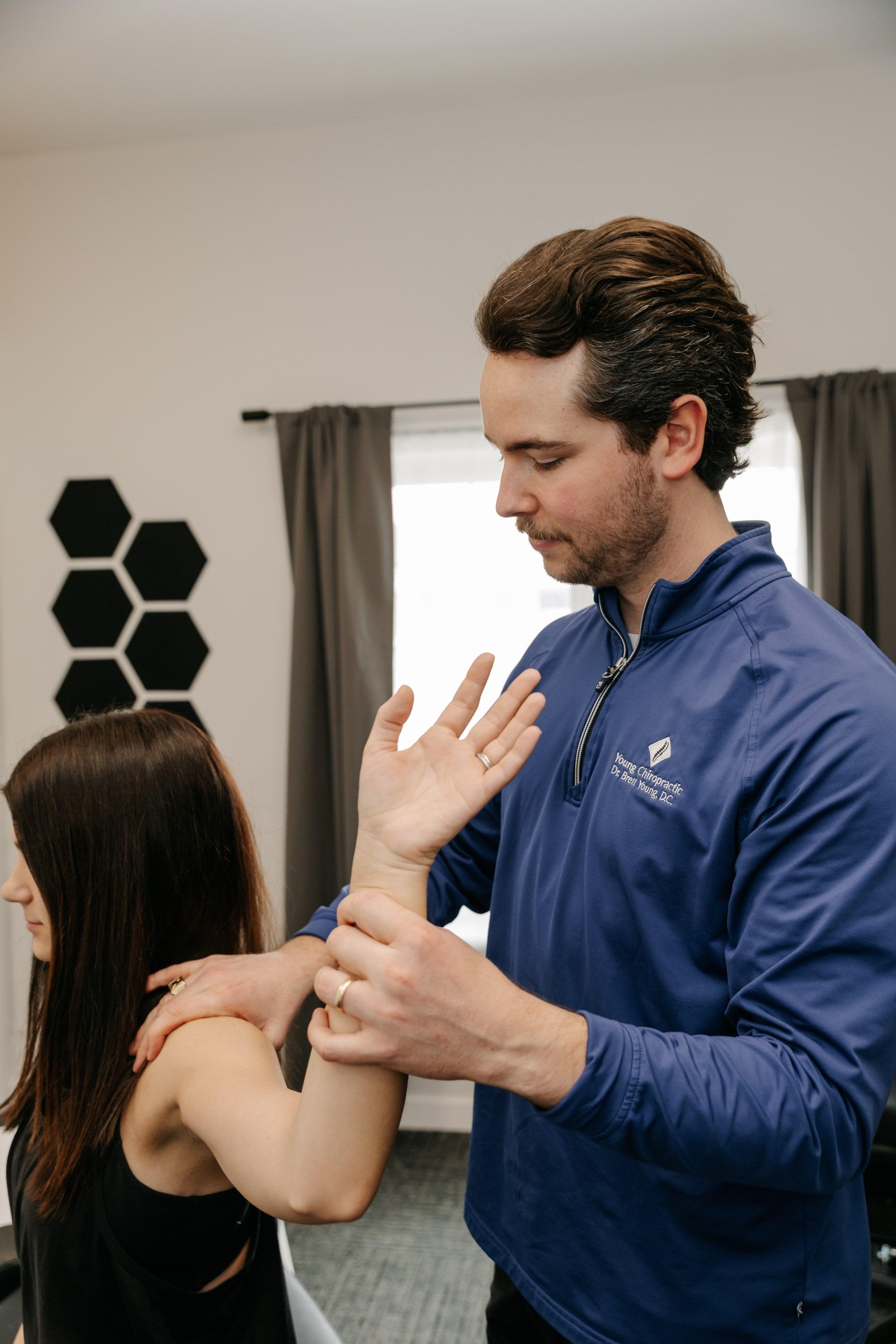
Why Does My Shoulder Hurt?
Your shoulder is the most mobile joint in your body, held in place by the rotator cuff, a group of four muscles and their tendons. Most shoulder pain comes from these tendons becoming irritated or overloaded, often called rotator cuff tendinopathy. Other common causes include calcium deposits in a tendon (calcific tendonitis), an irritated bursa, and frozen shoulder, where the joint gradually becomes painful and stiff.
Rotator cuff pain often aches on the outside of the upper arm and flares when you reach overhead, behind your back or across your body. Lying on the sore side at night is common trouble. Frozen shoulder tends to start with pain, then stiffens so it’s hard to lift your arm or reach behind you. Pain on top of the shoulder that spreads up the neck may be coming from the neck itself.
Common Causes of Shoulder Pain
- A sudden increase in lifting, throwing, painting or overhead work
- Repetitive reaching at work or in sport
- Long hours at a desk with rounded shoulders
- Stiffness in the neck and upper back
- A fall or an injury to the arm
- Age-related changes in the rotator cuff tendons
When to See a Doctor First
See a doctor or go to emergency before booking with us if:
- Your shoulder looks out of shape after a fall, or you can’t move your arm at all
- You suddenly can’t lift your arm after an injury
- Your shoulder is hot, red and swollen, especially with a fever
- Shoulder or arm pain comes with chest pain, shortness of breath or sweating
- You have pain at night that doesn’t ease with any position, unexplained weight loss, or a history of cancer
Your First Visit
- 1
Your Story
When the pain started, what you were doing, which movements set it off, and how it affects work, sport and sleep. - 2
Your Assessment
We test how your shoulder moves and how strong it is, find which tendon or structure is sore, and check your neck, upper back and shoulder blade, since shoulder pain often involves them. - 3
Your Plan
We explain what we found in plain words and suggest a plan. If anything points to a dislocation, tear or another problem outside our scope, we’ll refer you to your family doctor.
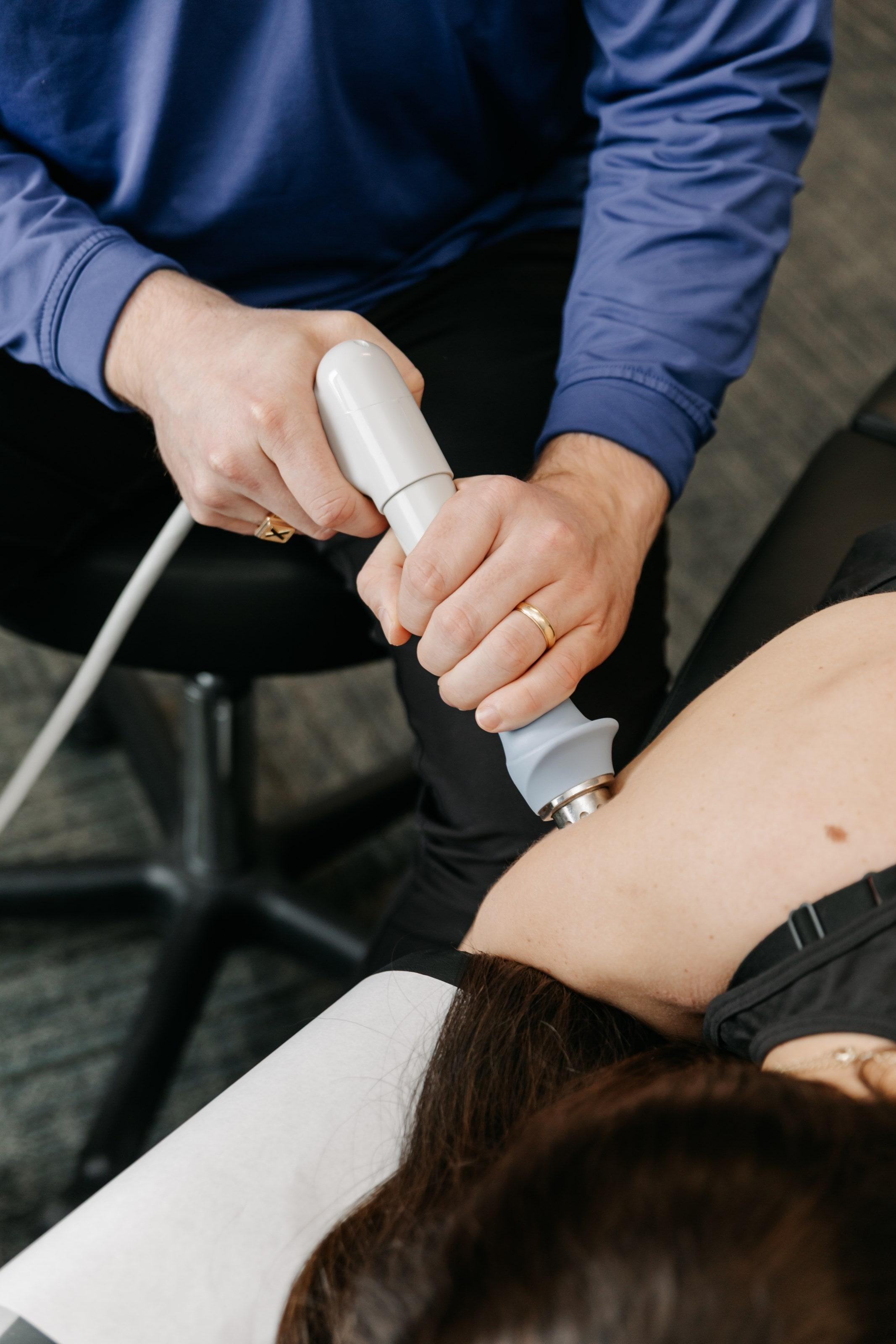
How We Help with Shoulder Pain
Care starts by calming the sore area and keeping your shoulder moving, then builds strength in the rotator cuff and shoulder blade muscles so it copes with your work and sport. Your plan may include:
- Chiropractic care for the shoulder, neck and upper back
- Shockwave therapy for rotator cuff and calcific tendon pain that hasn’t settled
- Acupuncture for muscle tension and pain
- Soft tissue therapy for the shoulder and upper back muscles
- Ultrasound and interferential current (IFC) therapy, which may help ease pain and muscle tension
- Strength and mobility exercises to do at home, progressed as your shoulder allows
- Advice on sleep position, desk set-up and overhead work
Shoulder Problems We Assess
Rotator Cuff Tendinopathy
Frozen Shoulder
Calcific Tendonitis
Shoulder Bursitis and Impingement
Neck Pain Referring into the Shoulder
Elbow Pain
Shoulder Pain FAQs
Can my neck cause shoulder pain?
Is shockwave therapy used for shoulder pain?
What is frozen shoulder?
Do I need an X-ray or MRI?
Book a Shoulder Pain Assessment in Uxbridge or Markham
If your shoulder is getting in the way of reaching, lifting or sleeping, an assessment can show what’s driving it and what to do about it.