You bend to lift a car seat or a bag of salt, your lower back grabs, and a week later it's still there. So you search "back doctor". That isn't a formal title in Ontario. Several professionals treat back pain, and when the search leads to a clinic like ours, the "back doctor" in question is a chiropractor.
At Young Chiropractic, our focus is the ongoing muscle and joint injuries that have hung on for months, and low back pain sits squarely in that group. We'd rather not go by "back doctor", though. A chiropractor's assessment takes in your hips, your feet and the way you move as well as your spine.
Before you book anyone, it helps to know who does what.
Who a "Back Doctor" Might Be in Ontario
A few regulated professionals assess and treat back pain. Their roles overlap, and each one has its own place.
- Chiropractor: a Doctor of Chiropractic (D.C.) assesses and treats problems of the spine, joints and muscles, and how they affect the nerves, using hands-on care and exercise. Chiropractors here are regulated by the College of Chiropractors of Ontario.
- Physiotherapist: assesses movement and treats with exercise, hands-on care and other approaches.
- Family doctor or nurse practitioner: the place to start when back pain comes with other health concerns. They can order tests and prescribe medication.
- Medical specialists: an orthopaedic surgeon, or a physiatrist (a doctor who focuses on rehabilitation), usually seen after a referral from your family doctor.
See your family doctor, or go to an emergency department, if back pain comes with numbness around the groin or inner thighs, new trouble controlling your bladder or bowels, a fever, leg weakness that's getting worse, or pain after a fall or a crash. Those signs need medical care first.
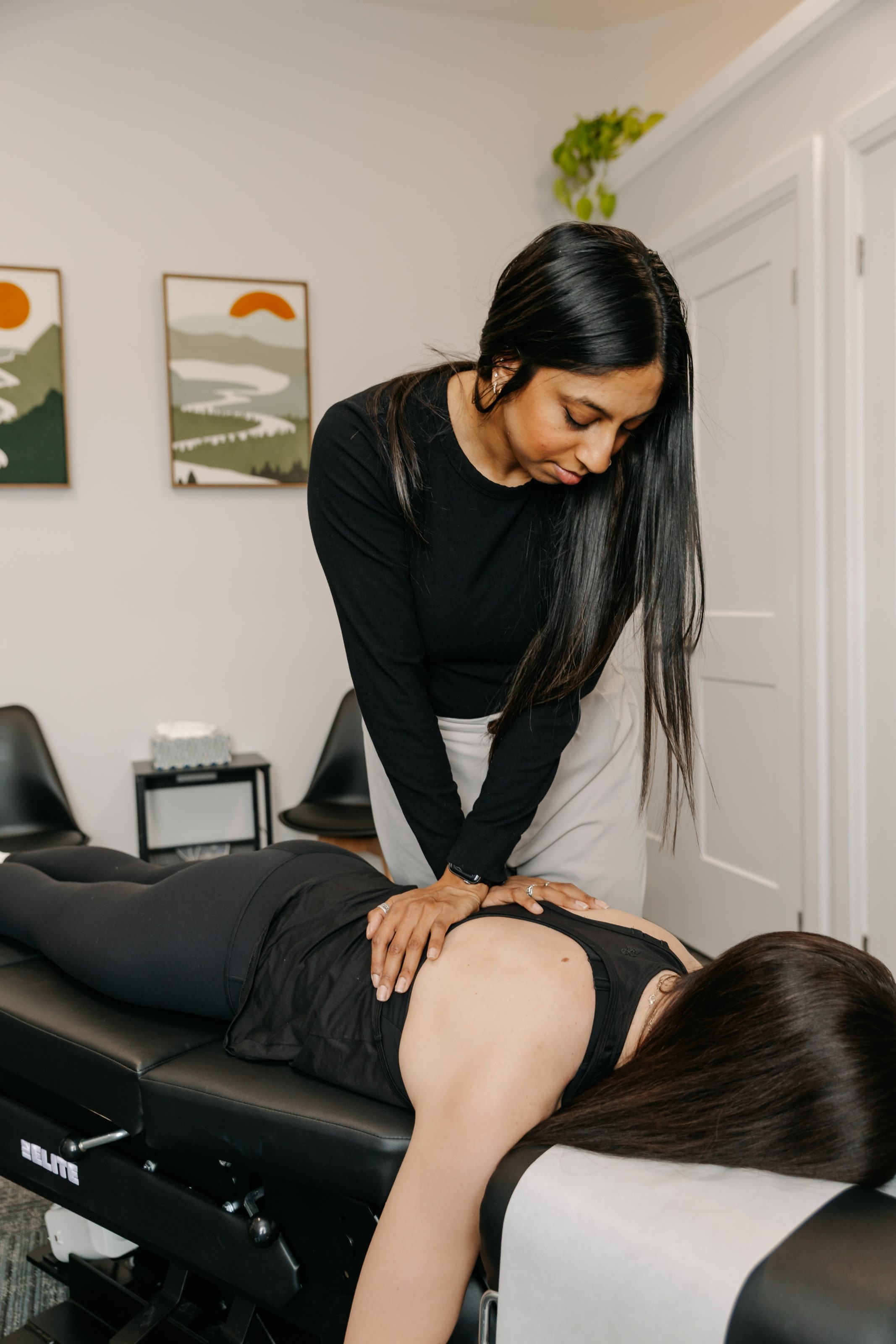
Why a Chiropractor Looks Past the Back
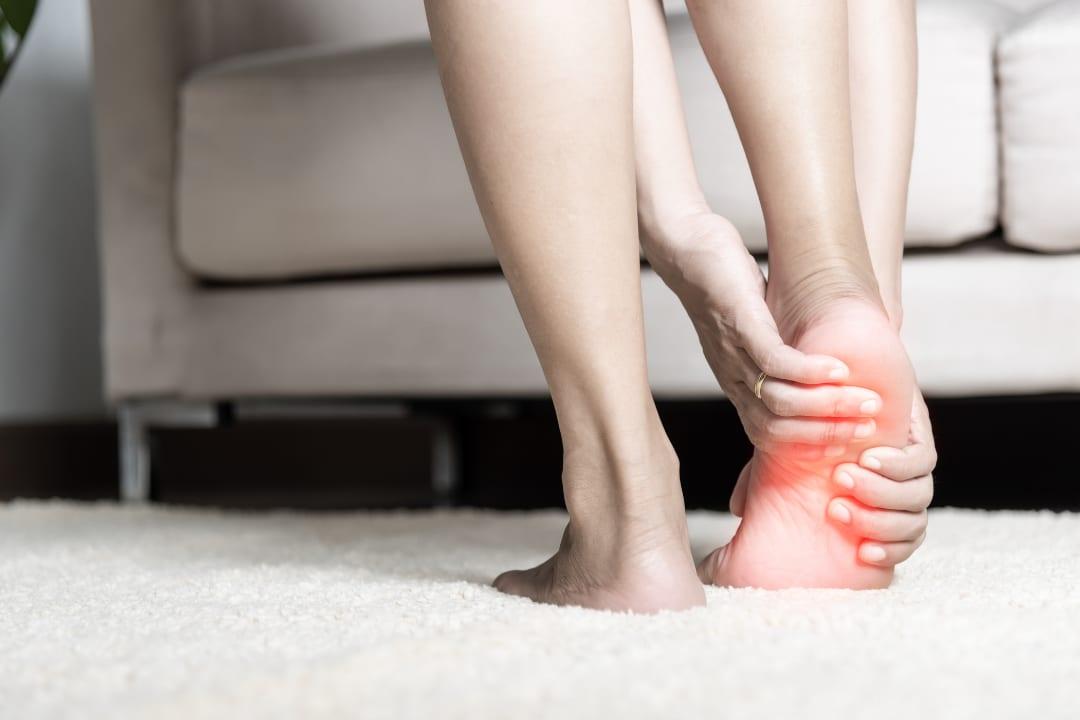
Chiropractors work with muscles, joints and tendons throughout the body. At our clinics that includes neck pain and stiffness, shoulder and elbow problems, hip pain, knee pain, ankle sprains and heel pain, alongside backs.
Pain in one place can come from somewhere else. A lower back that aches after a run on the trails may have more to do with a stiff hip, or with how your foot lands and the joints above it, than with the spot that hurts. Treating only the sore spot could miss that. It's one reason we look beyond the back when the back is the complaint.
How We Assess and Care for Back Pain
Every visit at Young Chiropractic starts with an assessment, before any treatment. We ask where the pain is, when it started, what eases it and what sets it off. You'll also be asked what you want to get back to, whether that's a Saturday hike, a round of golf or getting down on the floor with your kids, because the plan is built around it.
Then we watch you move. The assessment looks at how your lower back bends and turns, how your hips move and how your foot lands, and it checks for signs that a nerve is involved. If you bring a scan report or a doctor's note, we'll translate the terms. "Degenerative disc changes", for example, describes wear in the discs between the bones of your spine, something like wrinkles on the inside. It can show up on scans of people with no back pain at all.
We explain what we found and why it matters before we suggest anything. Depending on what the assessment shows, care may include:
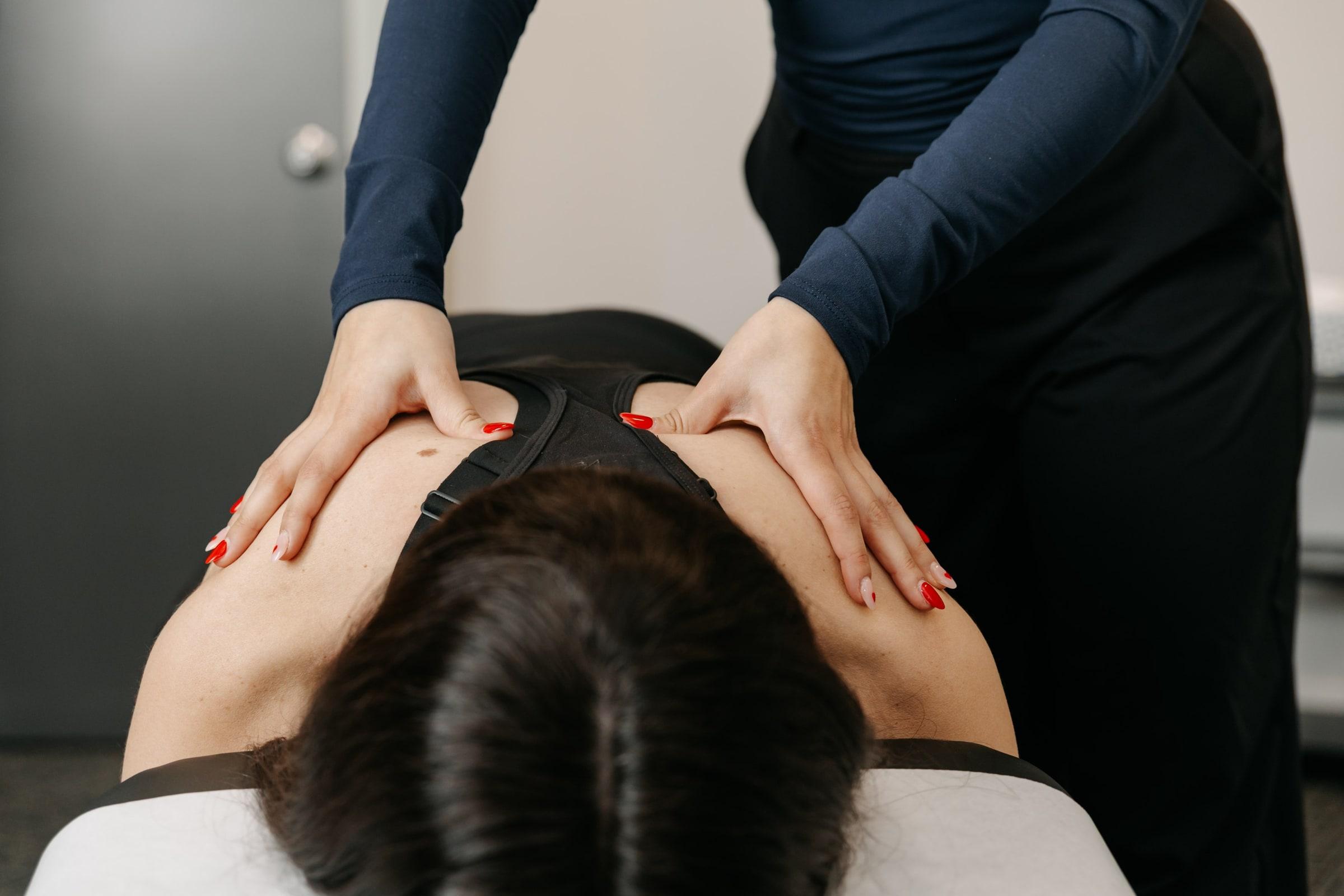
- Hands-on care: chiropractic adjustments and soft tissue work, which may help ease stiffness and pain.
- Exercises for home: movements chosen from what the assessment found, which can support your back between visits.
- Functional acupuncture: offered by Dr. Megan Jefferey, D.C., a chiropractor at our Uxbridge clinic, and Dr. Anita Raghubir, D.C., a chiropractor at our Markham clinic. Acupuncture may suit some people with back pain, and the assessment decides whether it fits you.
- Custom orthotics: considered when the way your foot lands may be adding load to your knees, hips and back. Custom orthotics start with a look at how you stand and walk.
- Shockwave: for stubborn tendon pain, such as gluteal tendinopathy at the side of the hip, which can be mistaken for back pain. Shockwave pulses are thought to stimulate repair in the tissue.
Questions to Ask Before You Book a Back Doctor
Whoever you see, these questions can help you choose:
- Is the person registered with their regulatory college in Ontario?
- Does the first visit start with an assessment before any treatment?
- Will they explain what they found, in words you can follow?
- Is the plan built around the things you enjoy and want to do again?
- Will they tell you when something needs your family doctor?
Looking After a Sore Back at Home
- Keep moving within what's comfortable. Short walks are a reasonable start, and bed rest isn't recommended for everyday back pain.
- Change position often if you sit for work. Stand up, walk to the kettle, sit back down.
- Lift close to your body and bend at your hips and knees.
- Heat on tight muscles may feel good. Use whatever feels better to you.
- Jot down what makes the pain better or worse, and bring those notes to your assessment.
Sleep and mood count too. Ongoing low back pain and depression can show up together, so mention a low mood to your family doctor if it's been hanging around.
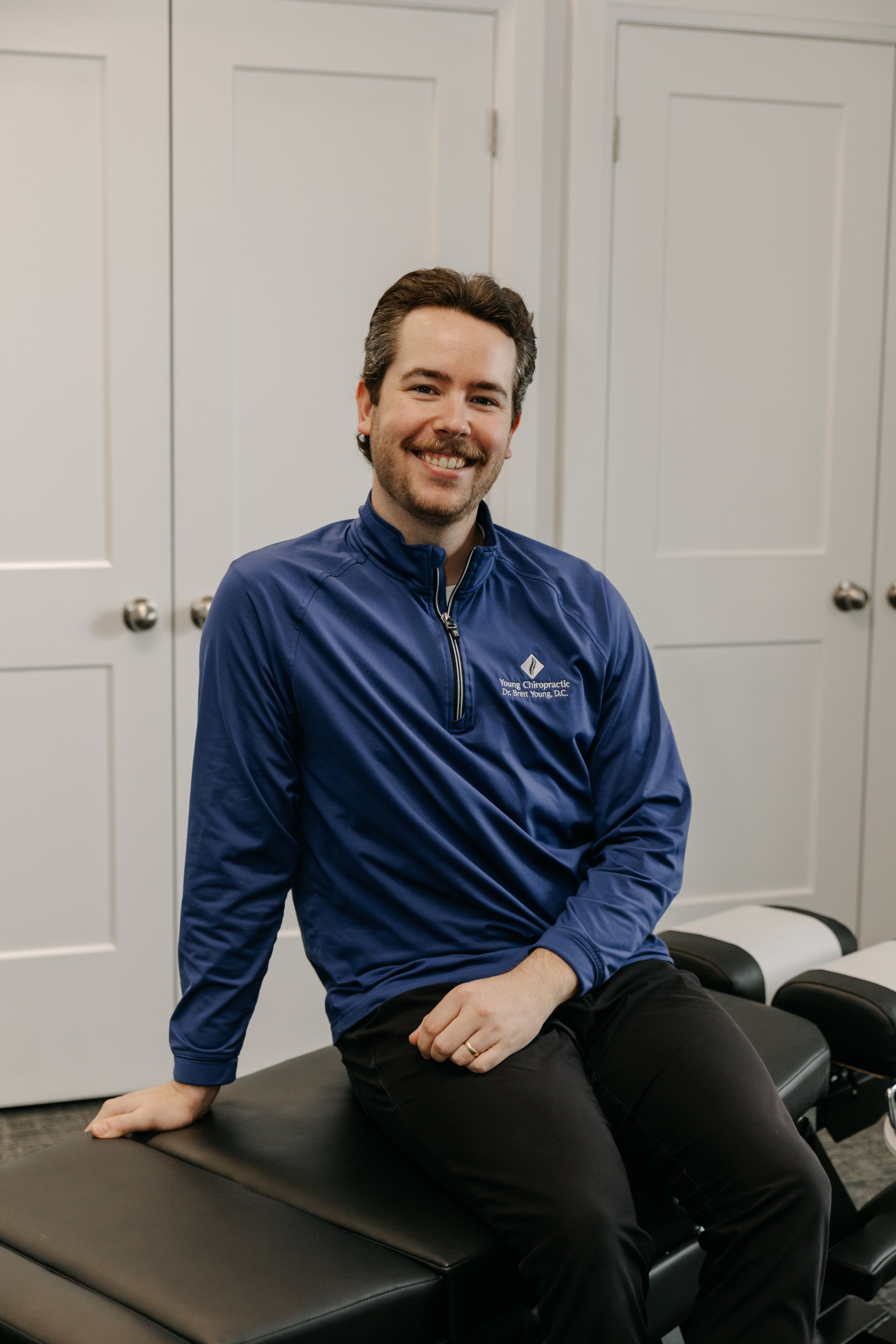
Your first visit, at Technology Square in Uxbridge or Mintleaf Plaza in Markham, starts with an assessment of your back, your hips and the way you move. We'll explain what we found and talk through options built around what you want to get back to. Both clinics work the same way and see patients from Uxbridge, Markham, and surrounding communities. Our chiropractors are registered with the College of Chiropractors of Ontario. When you're ready, you can book (opens in a new tab) with Dr. Brett Young, D.C., Dr. Megan or Dr. Anita.
Have a Question About Your Care?
Our team is happy to help. Reach out and we’ll get back to you.
Get in touch